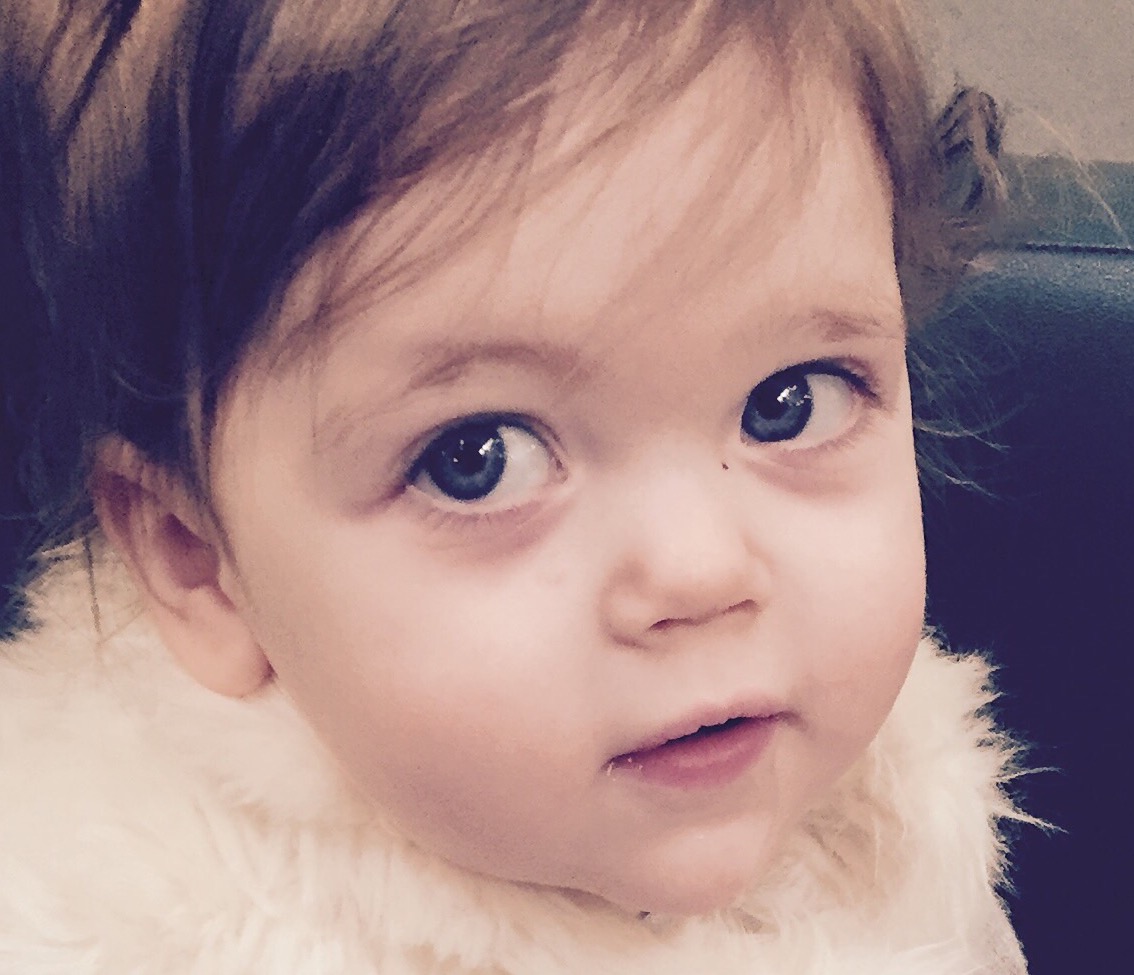
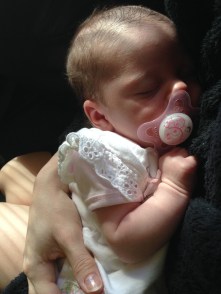
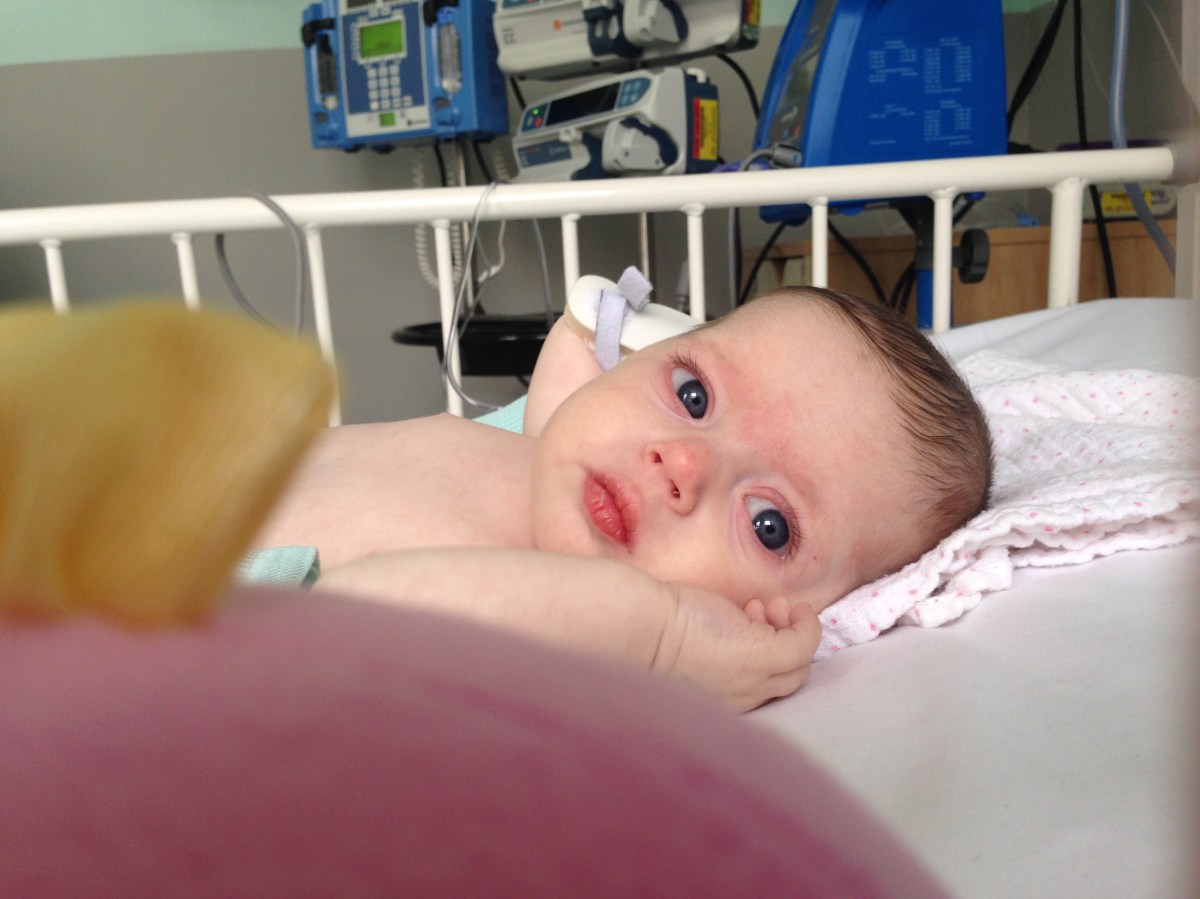
The Thing with Rare Diseases…

is that they happen to someone else.  At least that’s what I thought.  What are the odds of my little family being struck by some random illness that nobody has heard of? Well, I’ll tell you. 8:100,000. Those are the odds. 8 in every 100,000 children in the UK are diagnosed with this condition every year. The illness is called Kawasaki Disease. My daughter is Freya.

Today is National Rare Disease Day, so I thought I would focus on that for the subject of my latest blog post. I want to tell you what it means to have a rare disease enter your world.

The thing with a Rare Disease is…

They like playing hard to get.  Some of them are so well-disguised that they masquerade as a number of more common illnesses.  Take Kawasaki Disease.  You take your child to your GP with the symptoms of KD and you’ll most likely be sent home with the word ‘virus’ ringing in your ears. You’ll be told to give four-hourly paracetamol, interspersed with the same regular dose of ibuprofen; antipyretics to keep that troublesome fever down.  Days will pass, but you’ll believe the drugs will eventually do their work once the virus has run its course.  How many days do you let it run its course for? 3 days? Maybe more?  Did you know that there’s a UK medical protocol for dealing witha child  who has presented with a fever for more than 5 days? You’ll tell yourself that the rash that appeared after a couple of days is simply viral.  The eyes look bloodshot; wow this cold really has taken it’s toll on them. And your child is irritable and lethargic all at once, but aren’t all kids when they are poorly? You might even return to the GP, get a course of antibiotics, keep on with those painkillers to take the heat off the discomfort, literally.  Your GP might diagnose Scarlet Fever, or perhaps hand, foot and mouth.  Chances are, your child will not receive a diagnosis of KD until it’s too late. Until the vasculitis that has inflamed every blood vessel in your child’s body has managed to reach their little heart.  Coronary artery dilation and/or coronary artery aneurysms. There’s really only one thing that can cause those in a kid. Kawasaki Disease.

That’s not quite how it happened with us. We were one of the ‘lucky’ ones in that our daughter’s age and the day of the week played a huge part in getting her in the right place at the right time.  At 7 weeks old she was too young for Calpol, and on a Sunday there’s no GP to get it wrong. That said, Kawasaki Disease disguised itself as bacterial meningitis for the first week of Freya’s illness, and then decided to affect her body atypically, making the job of reaching a diagnosis all the more challenging.

It’s quite often a rebel without a cause. Where KD is concerned the cause is yet to be discovered. Without a cause, and with so many children presenting with the illness in a very independent way – not all children get the same symptoms at the same time – there’s no diagnostic test.  The treatment for the disease is effective, but we’re not really sure why.  Knowing the cause of this disease would open the door to swifter diagnosis and better treatment.  With KD it’s a bit of a race against time.  There’s a magical 10-day window within which to treat in order to improve the chances of the heart getting off a bit more lightly. Outside of that, the disease can get too much of a head start. Freya’s heart went from normal to screwed within 5 days.  The disease hid itself well for nearly 2 weeks, until on day 13 (unlucky for some) it went “ta-daa” on an echocardiogram. Nice move KD.

Rare means your doctor probably hasn’t seen it. They may not have even heard of it. So they’re most definitely not looking for it. I’ve spoken with GP’s who have not yet seen a case in their 20 year career. Naturally, doctors will work through the most likely culprits first. They’re not on high alert for some disease that quite frankly sounds ridiculous with its made-up name that conjures images of motorbikes (it’s not actually made up, it is named after Dr Tomasaku Kawasaki, who discovered the disease a few decades ago). But it sounds it. Some rare disorders don’t even have a name. In order to reach a diagnosis for a rare disorder, the medical professionals will have to go through a process of elimination with the more common illnesses that bear the same or similar symptoms. They will test for countless infectious diseases but draw a blank. Do you know, I actually thought they would take my daughter’s blood, put it into a computer and out would come the answer. I had no idea before this, that there were things you couldn’t test for. Silly really. Sometimes the Drs will try certain drugs, only to be baffled by the body’s lack of responsiveness. Our daughter had 4 different IV antibiotics entering her tiny little body, and yet she became more and more sick as the days went on. I couldn’t understand why the Drs weren’t making her better. But our child was diagnosed on day 13 and was treated accordingly. There are people out there with illnesses yet to be named, perhaps even discovered. Those people could wait years for a diagnosis. Two weeks felt like torture. I cannot imagine how that would have felt multiplied into months, let alone years.

If you’ve not heard of it, it can’t be that bad. Right? That’s what I thought. The day before Freya was diagnosed with KD she had a bone marrow aspirate taken in theatre under general anaesthetic. The moment they mentioned bone marrow, I knew they were looking for the ‘C’ word. What they found instead was a whole lot of healthy cells, and she was cleared of that. Relief.  But then the next morning you’re told that they’ve found it! You can’t quite believe it because the last 2 weeks have seemed like an eternity and now the wait is over! They tell you your child has Kawasaki Disease and you actually feel the tension in your shoulders disappear. Aren’t we lucky it’s only Kawasaki Disease. Never heard of that one so it can’t be a bad one. No, the bad stuff everyone has heard of. Leukaemia, meningitis…they’re the baddies aren’t they. No this Kawasaki Disease had to be ok. If it was that bad I’d have heard about it. Wouldn’t I? Except that it is that bad, but you don’t hear about it because your local children’s hospital has probably only seen 4 cases in the last year, and they all looked different.

Rare means there are so many unknowns.  If an illness is rare, it might not have been around for very long.  There might not be many known patients with the disease. Which makes treatment more tricky.  There is no standard UK protocol for the diagnosis and treatment of Kawasaki Disease.  That means you really are at the mercy of the doctors that you are dealing with. Again, I believe we were ‘lucky’.  From the moment a diagnosis was reached they worked tirelessly to aggressively handle this disease. NHS England gave permission for certain drugs to be used on Freya that had not been agreed for use in an infant.  They referred to her case as “a very severe presentation of Kawasaki Disease” remarking that the illness is particularly troublesome in very young babies.

Unknowns are hard to deal with, especially if you’re a bit of a control freak like me. I like to have all my ducks in a row. There’s no chance of that with this. And just as you begin to think things are looking up, KD throws you another curveball.   Long term prognosis is sketchy. But in all fairness, what long term studies have been carried out suggest that Freya might just come through this ok.

Rare is lonely. When you or your child is diagnosed with something pretty obscure you literally feel like the only person in the universe that is going through what you are. Because nobody had heard of KD it felt (still does sometimes) like they didn’t really appreciate the seriousness of it.  Even now, with everything I have shared through Freya’s Story, people ask “So, is she ok now then?”  Never quite quite how to answer that one.  Usually with a “Yes she’s doing really well..” When actually what I want to say is “Yeah, unless you count the fact that’s she now has a heart condition and we don’t know what’s around the corner…”  And it’s not just the general public either. You feel very alone when you’re dealing with Drs that can’t answer your questions because they just don’t know.

That’s where support groups come in. Through the various groups on Facebook I have connected with other parents like me who too have felt scared and lonely. Whilst all of our experiences might have differed slightly, one thing that unites us all is an understanding of the fear when you watch your child begin to slip away from you, and the sheer devastation of hearing that your child has been damaged by this disease. And let’s face it,  the heart is a pretty important organ.

Rare changes you. Since Freya’s illness, I have changed.  I suffer with anxiety, and was recently diagnosed with PTSD. I see a counsellor once every week for cognitive behavioural therapy to help me deal with the trauma of the last year. I find it hard to be around people who don’t understand, or don’t make the effort to. I probably find more comfort in chatting to a fellow ‘Kawamum’ online than I would get from a closest friend.  This experience has left me questioning everything I believed about my role in protecting my child.  I grieve for the healthy baby I gave birth to; the one with the perfect heart. And I am very much aware of our own mortality now. I am scared of dying, and I am scared of loss.

There is an upside. I have met some amazing and lovely people along the way. This experience has taught me that life really is precious and that you should embrace opportunities as they arise. I don’t have the strength for disappointment these days, so I have probably reduced my circle for now, a kind of damage limitation.  I take a lot of joy in meeting people who have been touched by Freya’s Story.   I get messages from strangers that remember when she has a medical appointment, or ask me how I got on at my counselling session. The well wishes and words of encouragement from those people has lifted me from the darkest of moods.

The support from friends and local businesses with prizes for a raffle that we will be drawing on Freya’s 1st birthday has been overwhelming. People are so generous, and I am very grateful to them. I may never come to terms with the fact that this happened to us, to our baby girl. But knowing that Freya has touched the hearts of so many has made this journey a little easier to travel.

So on this Rare Disease Day 2016, I would like to thank everyone out there who is helping to shine a light on Freya by sharing her story and supporting us with our ambition to raise awareness and much needed funding for research. Thank you ☺️
12799260_514903678702345_7766730085390118900_n

You can follow Freya’s Story with updates on her progress and other KD news at http://www.facebook.com/freyasstory


Because life, at best, is bitter-sweet

It has been a little over 8 months since Freya was diagnosed with Kawasaki Disease following her hospital admittance on the 31st May 2015.  She was 7-weeks old.  Infants under 1 year are hit particularly hard by the illness, and are at greater risk of heart involvement.  The magic window for treatment that has the highest odds for reducing the risk of coronary artery dilation and/or aneurysms is considered to be 10 days.  Freya was diagnosed on day 13 when an echocardiogram showed significant dilation to her tiny coronary arteries, and she was transferred by ambulance to a specialist paediatric cardiac high dependency unit (HDU) in another hospital.

Since her diagnosis, Freya has had numerous ECG and echocardiograms performed at follow up appointments. Some of those appointments have shown no change, but two of those appointments showed some remarkable improvement that managed to incite a “Wow!” from her Cardiologist.  In September we were advised that her right coronary artery (RCA) had improved to within normal parameters (around 2mm), leaving just the left coronary artery (LCA) and left anterior descending (LAD) with reduced, but significant, dilation.  The aortic valve had ceased leaking some time before.

I remember at the time asking the cardiologist (who wasn’t our usual one due to a mix up in dates), whether the swift improvement was cause for concern in relation to longer-term issues, such as stenosis (narrowing of the coronary arteries), but he had said that there was no evidence to suggest that was the case.  And so I made my peace (kind of) with the condition of Freya’s heart, and accepted that things were improving and that her prognosis looked good, regardless of how scary it all still was.

Her last appointment in our local hospital was a disaster.  We were kept waiting for nearly 3 hours with no explanation before finally being seen by a consultant who felt under-qualified to deal with Freya’s case.  Nevertheless, she performed an echo, the results of which suggested there had been no change since the previous echo.  No change is good news in these cases – at least things hadn’t got any worse.  Had she told me there was some improvement, however, I would not have believed it, and immediately contacted the original hospital to request that we be moved back under the previous cardiologist.  Sometimes convenience isn’t the best option; I would travel 10 times the distance for Freya to be treated by someone that I trust and respect.

Today found us back in Leeds, back with the Cardiologist that first treated Freya, and has taken pretty good care of her ever since.  She is the same Cardiologist who took me in a room and explained the risks of Freya’s condition back in June; the same Cardiologist who I went to battle with over not giving Freya Warfarin despite the treatment protocols suggesting that was what she should have.  She made a strong case, one strong enough for me to put my trust in her.  It was the hardest decision I have ever had to make, but it appears to have been the right one.  Freya has been thriving since her diagnosis, she appears to show no adverse affects, no night terrors, no evidence of joint pain, none of the things I see mentioned in many social media forums.

So come on then, tell us the news….

Ok, so today Freya had an ECG and an echo.  As usual, the ECG showed that heart function is all good.  During the echo, the Doctor remarked that Freya’s heart function was “Beautiful!”  She measured the arteries at their widest points and remarked that she could see two aneurysms on the RCA.  I was surprised by this, as previously we had been advised that the RCA had normalised, and I wondered aloud whether as the artery had remodeled, could any ‘true’ aneurysms now be more noticeable (Freya’s arteries were significantly dilated all the way along, without the typical balloon shape aneurysm you expect to see when you use the ‘a’ word).  The doctor went in to look again, and could not get the same image, or any image to show the aneurysms she believed she had seen.  Perhaps it was a bad angle?  Maybe Freya wriggled too much for her to get the same view?  I’m not sure, but the Doctor concluded that all three coronary arteries (the RCA, LCA and LAD) appeared to have remodeled to within normal parameters!  Wow! That’s cause for celebration!

During the acute stage of the illness, we were advised not to expect to see any improvement at all until Freya was at least one year old.  To have seen her arteries reduce to near-normal levels in just 8 months is remarkable!  She truly is a miracle.  Or maybe this is just the case with tiny babies?  Sure, they are hit hard by the illness and more of their little hearts suffer, but their organs are still developing and perhaps they just compensate for the damage and work harder to repair it?  Who knows? Research is still very much in it’s infancy (thus my passion for fundraising for this cause).

We sat down, and I asked my husband to dress Freya whilst I asked the questions I had prepared before I went in.  These are the questions I wanted to get answers for:-

  • What do you consider to be the current risks?
  • What are the exploratory steps we can expect for Freya?
  • When would those next steps take place, i.e. at what age?
  • What is the view on Reye’s Syndrome, and what are the suggestions in relation to aspirin during the Chicken Pox vaccination period?

Before I had the chance to ask my questions, the Doctor started to answer the first.  She exclaimed that the improvement was indeed remarkable, but that the speed at which Freya’s arteries had remodeled was unexpected and gave her cause for concern.  She knew that I understand that an echo can only see approximately 3mm of the length of the coronaries, and explained that she was concerned about what was happening beyond what she could see.  She aired the same concern that I had raised back in the Summer when I told another Cardiologist that I was worried that the swift remodeling could result in higher risk of stenosis.  Sometimes I wonder if I am bloody psychic!  She said that she would be happier if she could take a closer look at Freya’s heart to satisfy herself that the whole picture was as good as what she could see.

So, what’s the good news?

Ok, so the good news is that Freya’s heart has shown remarkable improvement, basically remodeling itself to where it should be, or would have been under normal circumstances.  If the next steps prove that the bigger picture is the same, the Cardiologist feels she would be comfortable to stop the aspirin.  That means that Freya would continue to be monitored into adulthood, that further tests (exercise stress testing, MRI, etc) would continue to take place during that period of monitoring, but that she would be treatment free.  Fantastic! That would be almost ‘normal’.  Wouldn’t it?  Wouldn’t that just be normal?

Yeah, so that’s sweet isn’t it?  What’s there to feel bitter about?

Alright, alright, I know what you are thinking!  For months I’ve suffered mentally over the prognosis for Freya and the fear that comes with having a child with a heart condition.  I should be unconditionally happy, right?  It’s just that the way they want to find out what is going on with the bigger picture is to carry out an angiogram.

“An angiogram is a test that’s used to find out more about your heart. It can help to show if blood vessels called coronary arteries, which supply blood to your heart, are narrowed or blocked. If they are, it can show where and how severely they are affected. It can also see how well your heart is pumping blood.”  http://www.bupa.co.uk/health-information/directory/a/angiogram

Whilst a CT or MRI are preferable in a child as young as Freya because they are non-invasive procedures, an angiogram is considered (by our Doctor) superior to a cardiac CT or MRI scan in that it provides a clearer image where the arteries concerned are very small, like in a young child.  The procedure involves inserting a catheter (a thin tube) into an artery in the groin or wrist and guiding the catheter to the coronary arteries where dye is inserted and a number of x-ray images are then taken.  Freya would need to be sedated, likely to go under general anaesthetic.  Not only is it invasive, but it is a procedure where the risks are greater the younger the child.

It is considered pretty standard practice to carry out an angiogram, or other exploratory test, a year after diagnosis with KD.  However, an angiogram is not performed in very young children without careful consideration.  We were told that the catheter that is used is kind of a one size fits all; they will use the same sized tube to enter Freya’s tiny arteries that they would use on an adult.  We were also advised that young babies’ arteries are quite sticky, and have been known to grasp onto the catheter,  causing the artery to spasm.  This can cause a heart attack.  The Cardiologist said that the hospital will be reluctant to carry out the procedure on Freya at such a young age (she will be 14 months old when she is a year post-diagnosis), but said that she feels that Freya is a special case and that it is important that this step be taken.  She says she will convince them to do the procedure.  I replied, “Thank you…I think.  I mean, on the one hand you are keen to move things forward and a clear result could end with us stopping the aspirin.  But you are expediting a potentially risky procedure and I am not sure how I feel about that.”

But I do trust her.  I think.  Didn’t stop me from e-mailing the world’s leading Kawasaki Disease expert for her opinion though…

And that’s where I am right now.  I’ve written this down to provide an update, but mainly to try and work out how I feel about it all.  I’m not sure, I feel quite numb.  So I am just going to dump all the crappy thoughts that are running through my head right now, and hopefully the answers will come to me over the coming days or weeks.  Excuse the rantings of a confused mind…

  • Here we go again, as soon as I let my guard down and ignore my instincts, someone goes and throws a curveball!
  • I knew this was going to happen!
  • I knew that there was a chance that the fast improvement was too good to be true.
  • What if I lose her after all?
  • What if I can’t bear to watch her go under general anaesthetic again? It was like watching her die on that table.
  • What if she doesn’t wake up from the anaesthetic?
  • What if she has a heart attack?
  • What if she dies?
  • What if she dies because of the procedure and they tell me everything was ok anyway?
  • What if there are signs of stenosis? They can’t operate on her this young anyway.
  • What if there are no signs of stenosis, but it happens when they’re not looking and she dies?
  • What if we say no to the procedure? How much potential danger would we be putting her  in?

I think that’s about all I can figure out from the fog right now.  Somewhere in there, though, there is a tiny voice of hope.  ‘Ant’ is doing her best to drown her out, but I hear her.  She sounds how I imagine Freya to sound in a year or so.  I see those eyes through the fog too.  They are looking at me, huge and wide, and they are saying “I’m going to be ok, Mummy.”  This kid is miraculous.  She is made of something stronger than you and I were made of.  Maybe, just maybe, she is going to prove them all wrong.  Maybe, (and I don’t consider myself religious so this just came as a huge surprise to me, hitting me like a juggernaut and reducing me to sobs), just maybe, someone heard my prayer….

IMG_5289

A Recipe for Disaster

So it seems I am suffering with post-traumatic stress disorder with a nice deep filling of depression, topped with a scattering of anxiety sprinkles.  If I were a cake, I’d be a fruitcake.

I was thinking this morning, after I left my second Cognitive Behavioural Therapy session, about what mental illness looks like.  What does someone suffering with mental illness look like?   I guess they look haggard and worn, frayed around the edges.  Scruffy, definitely; they wouldn’t have washed in weeks.  Tired, with dark purple circles under those sad eyes.  Hair scraped back in a ponytail in an attempt to disguise the oil slick it has become from days of neglect.  Shoulders drooping, head hanging down, slow lumbering gait where others confidently tread.  Yes, I reckon that’s about right.  Except it’s rare that you would get a real close look at one, because they’ll be under a duvet, or rocking in a corner; the lesser spotted hermit

Sometimes, mental illness looks like this…

IMG_3441

“Nooo!” I hear you exclaim.  “She can’t be depressed! Look at her, she’s smiling.  And I know she isn’t depressed, because she lives in that nice house with those three gorgeous kids.  Anyhow, I saw her in the Wine Bar last week and she looked like she was having a great time!”

Don’t get me wrong, there are plenty of people suffering with a mental illness who meet the description above.  I’ve been there myself, duvet pulled up over my head, praying for it to be bedtime again.  But this time, it’s not like that.  Mostly I look like the woman in the picture.  Sometimes that face has to be painted on, that smile fixed in place with staples invisible to the naked eye.  Other times it’s real, and I feel real joy.  Sometimes, behind closed doors, when nobody is watching, I lay curled up in the corner of the sofa and cry.  I could cry right up to 3pm, then paint that face on and pass pleasantries with you in the school playground at pick up time.  Being a great actress comes with the territory.

I don’t want you to think that I am fake.  I’m possibly one of the least fake people you will meet.  It might be an effort to put on that smile sometimes, but I am generally a very sociable person and if I didn’t feel like smiling before we started talking, it’s very likely that I will be genuinely smiling by the time we part company.  I’m like that; people lift me.

And suffering with depression, either long-term or temporary, doesn’t mean that I am miserable all of the time.  In some ways, whilst this illness can be debilitating, I think I am one of the lucky ones.  I am very tuned in to my thoughts and emotions.  When I suffered with post-natal depression after my first daughter was born (nearly 12 years ago now), it was different.  I was severely depressed.  I believed that my husband’s family wanted to get me sectioned so they could have my daughter all to themselves.  I considered leaving, and telling nobody where I was going; figured I’d go live in some little hut by a lake in the Outer Hebrides or somewhere.  I thought everyone would be better off without me, and I would be better off without them.  On my worst days, I did not recognise myself in photographs.   And on worse days than that, I actually contemplated how much easier life would be if my daughter could just be gone

I’ve always been a sensitive, thoughtful soul.  I guess I was predisposed to this kind of malady.  In my teens, my old bedroom at home was painted black and I wrote a lot of poetry.  I’ve never found it hard to cry.  I think I’ve cried an ocean in my years on this Earth.  I don’t believe I had ever been depressed before my experience with PND.  A bit of low self-esteem maybe, but not depressed.  But PND altered me; it’s like a part of me was broken that could never be repaired, and was the catalyst for years of on-and-off suffering with various mental health issues.  The last 12 years have been on the whole great, though peppered with periods of counselling, cognitive therapy and anti-depressants.  The last time I was prescribed anti-depressants was when I was pregnant with my youngest daughter.  The only thing that stopped me taking them was the risk of congenital heart defects for my baby; those of you that follow Freya’s Story will appreciate the irony in that.

Mental illness covers a whole spectrum of serious disorders in a person’s behaviour or thinking, with over 200 different conditions to choose from. Now, that was a bad choice of words; this isn’t something anyone chooses.  But you get my drift.  And although many people will suffer, with or without a diagnosis, with the same conditions all over the globe, the degree to which they suffer will vary with every individual. What I am going through this time is very different to anything I have suffered with before.  Firstly, the post-traumatic element is new; I hadn’t faced any real trauma before my daughter was diagnosed with a life-threatening illness last year, so that’s a first for me.  The treatment I am receiving is specifically designed to expel the flashbacks and help my brain to process the memories that have got a little lodged on their way to my long-term memory.  The depression isn’t new, however it has been nicely disguised, hiding in the shadows of the PTSD, waiting for the right moment to strike.  It felt now was a good time.  And then there’s the anxiety, and oh boy ain’t that a treasure!

So, just how much fun is it to live with me these days?  I guess you could ask my husband or my kids, but like I said, I’m pretty in tune with my thoughts, emotions and behaviour to give you a pretty honest view of that.

I’ve talked about PTSD before.  I’ve shared some of the flashbacks and intrusive memories that I have suffered since my daughter was diagnosed with Kawasaki Disease last June.  I’ve told you that sometimes, when I look at Freya for long enough, her face morphs into the sad, scared, sick little baby that pleaded with me with her eyes from a hospital cot.  I was embarrassed by the diagnosis.  You associate it with war veterans.  But, it does happen to people who have suffered a critical illness, or in my case watched a child suffer.  There’s a big difference between a flashback and a bad memory.  We all have bad memories from time to time; a smell that reminds us of our first love, a song that can recall memories of a lost loved one, events that remind you of the time you were badly beaten up at school by that one girl in your GCSE year (https://bluemama.co.uk/2014/12/01/one-girl-one-day/).  Bad memories I can deal with.  They are long-term memories, and as such when recalled the emotion doesn’t hit you with the same intensity that it did at the time.

A flashback puts you right back in the original situation, and all the components of that memory – the emotions, the sounds, the smells, the physical surroundings – are replicated with all the intensity of the event itself.  Apparently when these happen, I have to tell my inner child, the victim, that it is ok for them to remember, but that I will help them through it.  I know, right?!  But joking aside, the tips I have been given have worked, and I haven’t had what I would call a ‘real’ flashback for a little while now.  Removing the spare cot from our room was a stellar move and my brain no longer keeps me up until the wee hours to avoid going to bed.  Cognitive Behavioural Therapy that specifically focusses on trauma, exercises ‘mindfulness’ to overcome that trauma by training your brain to accept the thought, but to prevent it from lingering by focussing your attention on how the thoughts made you feel, rather than the memory itself.  I’m sure I’ve just understated the treatment completely, but that’s it in layman’s terms.  And it actually seems to be working.  We haven’t yet worked through the key reason for my condition (Freya’s illness), instead we are working through three other life events which evoke a particularly poignant memory (good or bad).  The idea being that you practice the techniques on some more dormant memories, so that by the time you reach the biggie, you’re ready for a fight.  Today we practised the technique on the memory of the death of my grandfather.  I’ve been told not to reflect on that outside of the sessions, so I shall leave that there.

The depression is different again, and kind of fills in the spaces between the PTSD symptoms.  It’s a general feeling of low mood, varying in intensity depending on the day, the hour, the situation.  I can’t describe it any better than it being like a dark cloud permanently looming above my head, casting a shadow over me.  The good thing about clouds, is that sometimes they shift a little in the breeze.  A strong wind can brush them off completely for a time.  And the sun sometimes manages to break through and cast a beacon of light upon my path.  In some ways, I have learned to control the weather.  In the PND years, I couldn’t have done that.  But as I have said, I am more self-aware now.  I know that even if all I want to do it bury my head under that duvet, I have to choose another way.  Having kids kind of forces my hand.  With my firstborn, I didn’t have to be anywhere, so it was far too easy to stay in my pyjamas all day and wallow in sorrow.  I know some victims of mental illness find themselves in that place, regardless of their personal circumstances.  Luckily, this hasn’t taken all of me, and I do function on a pretty normal level most of the time.

How does depression affect me?  Well, I go a bit into myself sometimes.  I think a lot.  I cry a lot, not always for any reason.  I question my capabilities as a mother, as a wife, as a person generally.  I lose sight of my self-worth.  I retreat from people when I feel hard done to, and the depression makes sure that the further I retreat, the higher the wall becomes.  I have automatic negative thoughts (‘Ant’ – you might have met her in previous blogs.  She looks a little bit like me, but a lot like that girl that beat me up in my GCSE year.  Pretty girl, likes to stick the boot in now and again).  My thoughts tend towards the catastrophic.  And I get a bit hung up on signs.  Numbers, magpies, white feathers, a necklace breaking; all signs of impending doom for me or my relationships.  On a good day, it doesn’t affect me at all.  No more than a grey cloud hovering above, threatening rain, but not quite managing to defeat the sunshine.  I’m stronger than I think I am.

For a more insightful description of how depression feels, I don’t think there is anyone that has done it better than The Black Dog Institute when they put out this video on You Tube (https://www.youtube.com/watch?v=XiCrniLQGY).

And lastly there’s that little treasure, anxiety.  That’s a whole new ball game.  Aside from the nasty flashbacks, I have found the anxiety the most debilitating and damaging of all.  The Mind website provides a pretty comprehensive list of the symptoms of anxiety, so I thought sharing that was as good as any list I could provide (http://www.mind.org.uk/information-support/types-of-mental-health-problems/anxiety-and-panic-attacks/anxiety-symptoms/#.VsTInsexrjI)

Physical sensations: Psychological sensations:
  • nausea (feeling sick)
  • tense muscles and headaches
  • pins and needles
  • feeling light headed or dizzy
  • faster breathing
  • sweating or hot flushes
  • a fast, thumping or irregular heart beat
  • raised blood pressure
  • difficulty sleeping
  • needing the toilet more frequently, or less frequently
  • churning in the pit of your stomach
  • experiencing panic attacks
  • feeling tense, nervous and on edge
  • having a sense of dread, or fearing the worst
  • feeling like the world is speeding up or slowing down
  • feeling like other people can see you’re anxious and are looking at you
  • feeling your mind is really busy with thoughts
  • dwelling on negative experiences, or thinking over a situation again and again (this is called rumination)
  • feeling restless and not being able to concentrate
  • feeling numb

That’s how I feel a lot of the time.  Add to that the fact that I have developed a hypersensitivity to certain sounds, which make me want to explode (want to? You do Jo!) and I’m pretty much a coiled spring of anxious tension from dawn ’til dusk.  You can imagine how fun it must be for my husband these days!

But.  And it’s a big but. It’s not all bad.  I am that girl in the photograph.  I do smile, and quite often that smile manages to reach all the way up to my eyes.  I want to do things, see people, have fun.  I like to escape the confines of my daily life sometimes.  I want to be happy.  I don’t want to cry, or shout, or feel inadequate.    I want my family to love me, not to worry about me or look at me with judgement when I fly off the handle for what seems like no reason at all to them.  I have things I want to achieve, places I want to go.  For now, I am giving the counselling route a try.  If things don’t get any easier anytime soon, I will consider medication.

No journey with mental illness is easy.  Some might be easier than others, and I am open to treatment and very self-aware.  I know that right now I have feelings that could result in life-altering decisions.  I also know that those feelings might not be real, and until the fog lifts I will hold those thoughts.  Thoughts are not facts.

To anyone who has ever suffered, or is suffering still, I hope you find your own way to mend.  There is help, but it can often be hard to ask for it, sometimes even harder to find.  I talk candidly about myself and my experiences now.  I haven’t always.  When I started this blog I was too afraid to make it public for fear of judgement.  But this last year has taught me some lessons about not holding back, so now my heart is firmly on my sleeve for all to see.  Judge, don’t judge.  It’s not important to me anymore.  And if I ever offend with a too glib portrayal of mental illness, please know that a) I only describe what mental illness means to me, how it has affected me, and b) that humour has often been my way of handling the most negative of situations.

One in four people will suffer with a form of mental illness in any given year.  Take a look round you, at your family, your friends.  If it’s not you, it could be one of them.  Be kind, always, because you never know what personal struggles other people may be facing, even when they seem to be wearing a smile.

image1

Follow me on Facebook at www.facebook.com/bluemamablog and if you are interested in learning more about Freya’s Story and Kawasaki Disease, you can visit www.facebook.com/freyasstory 🙂


All I need

You are all I need Peanut.  Sure, there are other people that make me happy, but no-one has the power to make the sun shine through the rain like you do.  For me, you have become a symbol of strength and love, and a living example to all of us that we really should grab this life with everything we’ve got, because there really are no guarantees.

Quite often that makes me sad.  I can’t help but wonder what your future holds; sometimes I wish I had a crystal ball so I could see your life unfold and be happy that this thing isn’t going to get you one day.  But I guess there’s no fun in that is there?  So I have to hold on to hope.

You have a cardiology appointment next week, sweetheart.  I always find myself a little more melancholy than normal, and a bit more anxious that I usually am, as the date approaches.  The problem with me, is that I like to be in control.  And this most definitely does not allow for me to have control.  None.  I don’t expect the appointment to give me any surprises.  Not bad ones anyway.  Your condition, if it gets worse, is unlikely to get worse any time soon.  We may even be blessed with improvement, but let’s not jinx things, eh?  The best I can hope for is no change.  And even then, it’s a limited view.  What’s frightening is that we only know what we can see.  An echocardiogram can only show us about 3mm into your arteries.  Beyond that you need an MRI scan, but they have no plans to go looking yet.  I wonder why?  Maybe because you are so young, it would be preferable not to sedate you. I have to remind myself that the only reason you didn’t need to be sedated for your last MRI was because you were too sick to care.

I think, to all intents and purposes, we could be bold enough to say you are out of the woods for now.  Can I say that?  Should I say that?  The scientific part of my brain keeps telling me that the only thing that can cause you any problems is biology; my words will not be the cause.  Thoughts are not facts.  For now, I have two questions for the Cardiologist.  “What will I need to do throughout her life to protect her heart?”  and “Remember when you took me in a room and told me about the risk of a coronary aneurysm rupture, and how you told me that you could do nothing to prevent it, and that if it happened she would be gone?  Well, do you think that is a risk now?” Let’s see if we can get some questions answered next week shall we? So you will need to behave yourself.  You won’t! You’ve been trying to take over the echo since all this started; next week you are going to be rolling, and grabbing, and trying to crawl off the table!  Things just got interesting!

So it’s just dawned on me that I never had one of those baby books, the kind where you write all the milestones down.  To be honest, I had books with your brother and sister, but the novelty wore off a few weeks in and there are two half-finished (half-started?) baby record books gathering dust in the loft.  And then I thought I could do it here.  So let’s see, what can I tell you about you….

You have been sitting up for a while now.  For some time it seemed like you were never going to get there, but you did.  Your preferred mode of transport continues to be the ‘commando crawl‘ – you’d be fantastic on one of those military assault courses! And you’re fast Peanut, real fast! When you spot something you want, you can be at your target in a nanosecond.  I have to be on full alert – generally the thing you spot is something you shouldn’t have and everything goes in your mouth.  When I thought I’d cleaned up all the pine needles from the Christmas tree, you still somehow manage to find them.  And eat them.

You have a real sense of fun.  You are going to be like your brother; full of mischief.  You are always doing something, always busy.  You’ve just started getting up on your knees too, which means more of the world is within your reach, and I can see how exciting that is for you.  You are always in my kitchen cupboards, always pulling books off the bookshelves, always finding the one thing amongst all the other things that you are not allowed to have.  You are going to keep me busy!

You have a few words in your vocabulary.  “Daddy” has been a favourite for some time.  There’s something very cruel about ‘dadadadada’ being the easiest sound for a baby to make.  You’ve said a clear as a bell “Mama” once.  It was magic.  You’ve not said it since.  Your absolute favourite is “Uh-oh”, which was remarkable when you first said it because it alerted me to the fact that you had dropped something, like that time you dropped your toy in Marks and Spencer and I wondered why you wouldn’t stop saying “Uh-oh”.  Now it seems that “Uh-oh” is a catchall word for everything.  I think it means you are hungry, thirsty, tired, sad, angry, happy…it’s a one word fits all kind of thing!  I’ve been able to make out a few other discernible words; doggy, dinner, bye-bye.  You know your sister.  She’s Eliza.  That’s “a-la-la” to you.

And you laugh sweetheart, you really laugh.  Just a couple of weeks ago, we needed to tickle you to incite a giggle.  Now you laugh at everything and everyone! You laugh at trees and flowers, birds and cats, me, your dinner, everything! Just the sight of those tickling fingers coming your way and you are reduced to an uncontrollable cackle.  You see joy in most things, and you are slowly teaching me to do the same.

But, it isn’t all hearts and flowers my little cherub.  There is one thing that is currently driving me crazy, and that’s the scream! You have developed a squeal that would rival any dolphin, and brings half the neighbourhood’s dogs to our doorstep.  I think, roughly translated, it means “Hey, you, why are you not giving me your 100% total undivided attention right at this very second and every second after it?” but I don’t talk baby, so who knows if I’ve got that right.  Most mums could probably ignore it.  Unfortunately, I suffer with anxiety, and have real trouble with noise, so that little scream goes right through me and rings in my ears.  Let’s hope it passes soon (either the screaming or the anxiety – both would be nice).

You do still hold the title of ‘Epic Sleeper’, and if I didn’t know you were real I would start to wonder if you were some kind of clockwork toy.  I’ve looked for the key, I can’t find one.  The daylight hours are short with you Pickle.  You wake around 7am (sometimes later), nap for anything up to 2 hours at about 10am, and from 4pm to 6pm your constant squawking acts as a reminder that it is nearly bedtime.  6pm comes, you’re milk-drunk and sleepy and off you pop to bed, and we don’t hear a peep from you ’til morning.  So, on a 2-hour-nap day, I figure we get about 9 hours of you.  The thought of going back to work and that becoming 1 hour is unfathomable.

I don’t know if you will ever remember this time in your life.  I hope you don’t. Your first year has been blighted with illness, fear, hospitals, and me.  And when I say me, I don’t mean that I’m not a good mum to you.   I shout sometimes because the anxiety builds up inside my like gas in a pop bottle, and sometimes your brother or your sister, or a noise, or a setback, shakes me up just a little too much and the lid blows off.  And I am often sad.  I cry.  A lot.  I can’t tell you that I love you without tears pricking my eyes; I hope you don’t grow up associating love with sadness.  Sometimes when I look at you for too long, your face becomes the face of that tiny baby pleading with me with her eyes.  I don’t sleep that well either, because I’m always straining to hear you breathing on the monitor.  When I wake, it feels like I have slept holding my breath, and I am frozen in my bed until I hear a shuffle or a snuffle from you.  I am sure all this will pass, and I am getting help for it so that I can get this under control before you do start to notice that mummy is always sad.

It is lucky, then, that I adore you.  You are a pleasure to be around (which is lucky indeed, as you are the only person I see very much of!).  If  you were a different baby, I reckon I’d have cracked up by now.   But you, my dearest Freya, are the light in the darkest of days.  Sometimes, you look at me with those ocean deep eyes, and it’s like your very soul is speaking to me; “I’m gonna be ok mummy.”  

image1

Please feel free to like, share or comment on my posts. You can also learn about Freya’s journey with Kawasaki Disease at http://www.facebook.com/freyasstory

An Exercise in Mindfulness

mindfulness
ˈmʌɪn(d)f(ʊ)lnəs/
noun
  1.  the quality or state of being conscious or aware of something.
  2. a mental state achieved by focusing one’s awareness on the present moment, while calmly acknowledging and accepting one’s feelings, thoughts, and bodily sensations, used as a therapeutic technique.

(Source:Google)

The thing is with this kind of stuff is that it all sounds a bit new age, off in a forest finding yourself whilst hugging a tree, doesn’t it?  Well it does to me anyway.  But I was given my homework at the last session (my first session) so I thought I should play along if I really wanted to beat this thing.  The counsellor gave me a pile of papers last week, and had ticked a number of the exercises that she wanted me to practice.  I am undergoing Cognitive Behavioural Therapy to deal with trauma; I apparently have post-traumatic stress disorder (PTSD).  I say apparently, because to be honest I’m pretty embarrassed with the diagnosis.  I mean, you hear the word PTSD and are immediately met with images of soldiers on the frontline in Afghanistan, or firefighters coming out of the Twin Towers.  I have never once in my life imagined a normal mum, with a normal life, who can’t shake off the events of the last year when her daughter was diagnosed with a serious illness.   And that is who I am (except maybe less stress on the ‘normal’).

Anyway, I shared an image on my social media pages that I created last week (my brain), designed to illustrate what goes on in the mind when it’s owner has a bit of a tough time handling a traumatic event.  Although I don’t think I am worthy of the PTSD diagnosis, I do understand what is going on up there at the minute and it helped me to show it in a diagram.  The long and short of it (no pun intended) is that the events of last year have become too big for my brain to process.  Those short-term memories should have made their way down into the long-term memory by now, but they’ve got themselves stuck.  And because they are stuck in my short-term memory, they are there, all the time; a constant reminder of those dark, dark days.  Sometimes they are that there, that it feels like they are here.   Now let me tell you there is a massive difference between recalling a painful memory, and intrusive memories and flashbacks.  I was ‘blessed’ with a pretty remarkable memory, particularly for words.  I can recite poetry that I’ve not read in years, I can recall the exact way I felt when I was thirteen years old and my Grandad passed away, and yes dear Husband, I can remember what was said in that argument in 1998.  I don’t seem to be able to let go of things that have evoked a strong emotional response.  Not a bad thing, unless you feel most things with the intensity of a Tsunami, in which case you find yourself with a hell of a lot of stuff up there.  But I digress slightly.

I’d say the main difference between a memory and a flashback is the intensity of the emotional response.  Of course we all feel a little sad when we recall a loss, or a particularly difficult time in our lives.  But when those events have been properly processed, they evoke just a small amount of the emotion originally felt.  When those events haven’t been correctly processed because the brain just couldn’t manage the overwhelming task, they are recalled with all the strength of emotion that was felt the moment that it happened.  I think it might help (me more than anyone, perhaps) if I tell you what kind of intrusive thoughts and/or flashbacks I am talking about.

Intrusive Thoughts

These vary from images that flash in front of my eyes when I am least expecting it (though not to be confused with a ‘flashback’ – you’ll see why later), to a little Voice of Doom in my head that likes to play Devil’s advocate with the ever-so-slightly-smaller Voice of Hope.  You might have heard me talk about ‘Ant‘ before (Automatic Negative Thoughts)?  Well she’s a whole other kettle of fish!  I don’t seem to hear much from her these days, but I often wonder if she is pulling the strings of the Voice of Doom.  Ok, so now I sound like I have multiple personality disorder, and whilst I do not profess to be particularly knowledgeable on that subject, I can confidently say that I do not! These parts of the brain exist in all of us, I just like to give them a name as we are so well acquainted.

So, let me give you a few examples.  

If you are old enough (that is, as old as me) then you might remember that 1980’s toy, the ViewMaster?  Hang on, I’ll find you a pic…Unknown.jpg…There you go.  When I close my eyes, it’s like an automatic ViewMaster, presenting snapshot after snapshot of memories.  Bad memories.  Mostly it’s Freya; lying in her hospital cot pleading at me with her eyes, gasping for breath, disappearing into the MRI tunnel or her eyes rolling into the back of her head as she was forced into sleep on an operating table.  The worst snapshot is the one of her lifeless, limp little body at the moment that I realised this was going to be bad.
Sometimes, it’s not Freya, but me that I see.  Like watching my own life through some kind of out of body experience.  That’s what happened when I went to bed last night.  Image after image of all the moments when I felt most frightened and most vulnerable during my 6-week incarceration courtesy of 3 of Yorkshire’s finest hospitals.  The moment the Cardiologist took me to a room and told me she couldn’t do anything to save Freya from the worst of risks.  The moment I tried to go back to the HDU, to my little girl, and slid down the wall because I couldn’t bear to take one more look at her if I was going to have to lose her.  The times when visiting hours were over and my lonely evenings began.  The long walk down those LGI corridors at 3am when my body betrayed my resolve to stay awake by Freya’s bedside all night (they wouldn’t let me sleep on the ward for that period).  And standing in the hospital Chapel doors, not really knowing why, but writing a prayer all-the-same; “Dear God, prove them wrong.”

Those are some of the things that I see when I close my eyes.  So I don’t.  I stay awake for as long as I can possibly keep my eyes open.  Partly because that means there are less hours for Freya to sleep ‘unsupervised’, partly because of what lies behind closed lids.

And then there are the thoughts.  The what ifs, buts and maybes.  I’ll be brushing Freya’s hair, and wonder whether she will have her brother’s curls…“What if you never see it?”  I’ll be listening to her gurgle and babble away in that special little language of hers and think about how I can’t wait to be able to chat with her…“As long as nothing bad happens before then.”  I swat those thoughts away like pesky flies, but the sneering tone lingers.  Every thought I have about the future is met with a voice warning me not to tempt fate.

Flashbacks

These are less common.  It’s hard to tell the difference between a flashback and an intrusive thought/memory sometimes.  I have mini ‘flashphoto’ moments at times.  I don’t know if you have ever seen that movie with Brad Pitt, Se7en?  <<Spoiler Alert>> There’s a scene right near the end when he opens the box and just for a split second you see an image of his wife’s head in the box.  It’s that quick, you don’t even know if you really saw it, and it’s only when you’ve seen it a few times that you start to expect it.  Well that happens to me with images of Freya, except sometimes the image sharpens until it has altered reality.  Just yesterday, I looked down at her little post-bath face framed by a fluffy white towel and was immediately taken back to the moment I first held her in my arms, wrapped in a hospital issue blanket.  Without any warning, a rush of sadness overwhelmed me and the tears that are always there at the brink started to fall.

I think for me, the differentiation between the intrusions and a flashback, is in both the intensity and their ability to alter reality.  The intrusive images are played to me one by one, like you would see with every click of that little red ViewMaster.  They are disturbing, upsetting and unnerving.  But I can shake my head and try to make them go away.  The flashbacks are different.  Whether it be seeing Freya’s face change right in front of my eyes to the point that I am again holding my sick child in my arms, to reliving a particular event, they steal into my life without warning and manage to transport me back in time to when it was all very real and very raw.  When the ‘real’ flashbacks happen, I am cold, rooted to the spot, I tremble, I sweat, my chest tightens and I can’t breathe.  And I cry, I cry a lot.

There have been a number of triggers for the ‘real’ flashbacks.  Mainly smells and sounds that take me right back to those weeks in the hospital.  The phone rings at the wrong time and it’s the monitors beeping incessantly to tell the nurses the IV has stopped running, again.  Freya’s bedtime toy starts to play it’s little tune in the middle of the night, and we’re right back there, in that cubicle, her eyes staring blankly at the glowing seahorse that soothes her to sleep.  I can’t sing a certain song, or hear certain pieces of music without being stopped in my tracks as my surroundings and environment change around me.  Having Freya’s old cot by the side of my bed is a major trigger.  The silhouette of the bars in the dim light of our bedroom at night; I find myself constantly checking the baby that isn’t there (she is in her own room now).

I feel like I am constantly being hijacked by my fears and my memories.  They don’t want to let me go, they don’t want me to let go of them.  And as warped as it might sound, I’m not sure if I want to let go of them… 

Letting Go

What does that actually mean?  You know what I am most scared of?  I’m scared of beating this, and forgetting.  Scared I’ll stop appreciating what we all went through and begin to take life for granted.  Scared that if I forget how it felt, I won’t fight to make sure Freya has the best life she can possibly have; that we all will.  And because I feel like my whole self has been defined by the events of the last year, I am scared that if I let it go completely I will not know who I am, and I will be lost.

But I do know that I have to let this go.  I have to open my mind to the treatment I am being offered.  I have to shift these things from my short-term memory down into the long, where they will never be forgotten, but where they will cease to have control over my life.

Treatment

Today I started the treatment in earnest.  During the session, I had to undertake a Mindfulness of Emotions exercise.  I was already crying before we started; I had been asked to think of 5 events in my life that had had either a positive or negative emotional effect upon me.  Always the over-thinker, I struggled to think of them and my mind went blank.  I thought of a couple of things – Grandad dying (bad), Eliza’s birth (bad), Finlay’s birth (good)… Nothing else would come, absolute blank.  Obviously the situation with Freya goes in there at number 5, but we had to agree to leave number 4 for next time.  I think the plan is that you practice the techniques whilst processing some old memories/events so that by the time you reach the biggie you are an expert in handling thoughts and emotions.  Something like that.

So, I sat in my chair opposite the therapist, and she handed me some paper towels to wipe my eyes (I have no idea why they don’t realise they might need tissues for these things!).  She told me to close my eyes, lay my feet flat on the floor and sit straight with my hands on my lap.  All I had to do was to sit still, feel my body in the chair, and when a thought came along I was to accept the emotion that it brought with it, and dismiss the thought. What actually happened was a full blown panic attack.  I felt the anxiety building as I sat there facing the counsellor with my eyes shut (did she not hear that I have an issue with that?!)  I was conscious that my feet wouldn’t stay still, and I was wringing the tissue in my hands.  Every inch of me wanted to get up and run, and it was one of the most uncomfortable things I have ever done.  When I stopped breathing, and then started gasping for breath (I know! Idiot!!) I had to open my eyes.  The counsellor had a chat with me about what had happened, and she said that I was trying to run from what I might see with my eyes closed, and we should start again.  This time I would face the window, so I might feel under less scrutiny.

The remaining 15 minutes of the exercise were tougher than I imagined.  But in that state of quiet awareness, I could actually see the thoughts arriving and feel the physical effects that those thoughts were having on my whole body.  It was intense, and surprising.  Sitting there in that state, I was acutely aware of how my body reacted to the thoughts as they intruded.  My toes were actually curling, my whole body squirmed, and my breathing became more rapid.  And then, of course there were the tears, but I never had that much of an issue producing those.  Sitting there allowing myself to feel the emotions whilst trying really hard to tell the thoughts to bugger off, I felt like one of those shove ha’penny machines at the amusement park.  A mind full of thoughts spilling over into my consciousness, causing the emotions to come rushing out in waves.  Towards the end I felt bruised.  But I did notice that within the last few minutes I began to notice the sounds around me, and no longer noticed the thoughts.  Cars going by the window, the scrape of a chair from the floor above, the buzzing of the PC on the desktop.  And as I noticed those noises, and the noises in my head began to quiet themselves, I felt my shoulders drop and I was still.

My homework is to practice that every day for at least 15 minutes.  As I am not sleeping, and am delaying bedtime, the counsellor suggested that I do the exercise in bed.  It’s like training your brain to accept thoughts without entertaining them, to feel the emotion that those thoughts evoke, but to focus on something else so that those emotions can be let go.  Right now, my thoughts are being overindulged.  They need putting on the naughty step, and I need to stop allowing them to dictate how I am going to live my life.


Wish me luck.

To Immunise or not to Immunise…

…That is the Kawaquestion!

If you’ve been following Freya’s Story through my blog or on Facebook (www.facebook.com.freyasstory), then you’ll know that one of the hurdles I have been trying to get over since her diagnosis and treatment for Kawasaki Disease is the question of when to immunise.  When is the important question here – it is not a question of ‘if’ for me.  Freya is my 3rd child; I had the older two vaccinated in line with the standard UK immunisation schedules without hesitation.  They both had the (then controversial) MMR vaccination that was vilified for years, for those claims to be later contradicted by the very doctor who made them.  I am not an antivaxer (yes, that is a word that is banded around various mum networks).  I can’t say I’m a provaxer either to be fair; in all things medical I am a conformist.  I trust the NHS and the doctors to have made the right decisions.  Well I used to anyway.

Now before I go on to share all the information I have in relation to this subject, there are a couple of things you should know.  First of all, the information I have received is contradictory to say the least.  I’ve even had different information from the same doctor, just on a different day.  And therein lies one of the biggest issues, and the key reason why we should be campaigning for standard protocols for treatment and care of Kawasaki patients.  But that’s a whole other blog.  Secondly, I take no responsibility for the decisions you may make in relation to this issue.  I am not a medical professional; I am just a mum that wants to do the right thing for her child.  I could not protect my baby from Kawasaki Disease; I have to be able to protect her from the other nasties, if I can.  I will share the information I have and where I’ve found it.  You also need to understand that Freya’s case is an individual one.  We certainly haven’t found a doctor in the UK who has received a patient as young as Freya where Kawasaki’s is concerned.  Generally children are older (commonly between 6 months and 5 years) and have therefore already begun their immunisation journey.  Infants diagnosed with this disease have often already had at least the first tranche of jabs (leading some to believe the vaccine to have been the trigger that KD needed to start it’s evil – a theory that I don’t discount, in fact I find it a very interesting theory with some validity and would not be surprised if it is confirmed as one of the triggers in the not too distant future).  Indeed, some of the vaccines state an increased risk of Kawasaki Disease in the patient information – information we often don’t read before we give consent for the needle to go in.  Again, I do not want to be a scaremonger, and it is absolutely not my intention to send cats amongst pigeons.  I’ve already said I am a provaxer.  I am pro-choice in all things – but I believe in those choices being informed if you are someone like me who needs to know it all (and often thinks she does, lol!).  

Freya was 7 weeks old when she became sick.  She was hospitalised on the very first day that she showed a single symptom (fever) and spent a number of days on a paediatric HDU, several weeks in a Children’s Hospital, and a week on a Cardiac HDU.  We hadn’t yet seen a health visitor, and the appointment for her first set of immunisations (8 weeks) has just come through.  I guess due to her condition, and later the treatment she received, it wasn’t possible to start the process of vaccinating with Freya whilst she was in the hospital.  She was 7 weeks old when she went in, and 13 weeks when she came out, so she was already behind schedule.  She received a blood transfusion, intravenous immunoglobulin (a blood product) and intravenous and oral steroids.  All of these have an impact on the immune system, rendering vaccination difficult for a certain period of time.  And I can’t be more specific than that, because that is one of the biggest areas of contradiction I have come across when researching this subject, and the reason why now, at nearly 10 months old, Freya has not had a single vaccination.

Some might wonder why that is an issue.  Plenty of parents (those antivaxers) make the decision not to immunise their children against some or even all of the diseases that the immunisation schedules seek to protect them from.  There are children who are unable to receive the immunisations because of poor, weakened or non-existent immunity.  We vaccinate the many to protect the few; herd immunity.  I could trust that everyone else has been protected, so Freya will be ok among the herd.  But, what if…  And then there is chicken pox – we don’t routinely vaccinate for that here in the UK (they do in the States).  If you Google “chicken pox and aspirin” you will find one big reason why aspirin and kids don’t mix; Reye’s Syndrome, a rare but potentially fatal illness linked to the fever associated with Chicken Pox and Influenza in children taking aspirin.  Ok, so the link has been found where high doses of aspirin are taken, and not yet with the low anti-platelet doses that a KD kid is prescribed, but nonetheless it’s a nasty illness and one I don’t want to take any chances with.  Freya has been through enough.

So what happens if you have a child who has not been immunised, and you are concerned about them coming into contact with what others would consider pretty innocuous illnesses?  Let me tell you what happens with us.  Freya has not been to a baby group; not baby massage, or baby music, or baby yoga.  Hell, she hasn’t even been to a playgroup, and when my older two get invited to a kids party, Freya stays at home.  Don’t get me wrong; we have not become social recluses.  Instead I apply my common sense to the activities we will undertake.  I know there might be someone in the coffee shop who has the flu.  Why is that kid in the shopping centre not at school? Could they have chicken pox?  I can’t hide us away from the whole world, but I can reduce the risk of her coming into contact with these nasty germs and bugs.  I call it damage limitation. She has one or two little friends that she sees from time to time, but only when they are well.  And don’t forget she has an older brother and sister who are exposed to all manner of things at school every day – we don’t make them wear a mask!  It is a source of sadness for me though.  Freya is such a happy, sociable child, and I worry about the effect this lack of exposure to her peers might have on her development.  I want her to laugh and play with other children, to learn how to share, to grow bonds and discover new things.  Instead there is a lot of singing and dancing going on in this house, which isn’t a bad thing (unless you’ve heard my singing!!). And with a bit of luck we can catch up with those immunisations soon and provide what we believe to be a little protective bubble around our child before it is too late for her to start over.  The knock-on effect of KD will be huge – when I return to work, she will have to go to some form of childcare.  She will be over a year old, and will never have been with anyone else other than her close family.  That’s going to be a tough one for both of us to handle…

Let me go back to the beginning of Freya’s immunisation journey.  While we were in the hospital with Freya we were advised that she shouldn’t have the immunisations, first because of her condition, and secondly because of the medication.  A lady used to pop her head in our cubicle door every other day with an immunisation leaflet and I repeated often that we had been advised Freya would have to be left to catch up.  I was promised an individualised immunisation schedule to leave the hospital with; it never materialised.  I made a number of calls to the hospital to enquire about when I could start the process, and to the Health Visiting team to ask them to stop the weekly postal reminders telling me what I already knew; Freya had not received her first immunisations.  Eventually I got the call from the hospital that advised I could give her any killed (inactive) vaccinations immediately (she was discharged one month after treatment for KD), but that I should wait 3 months post steroid treatment for any live ones.

I did a bit of research, because I was convinced there should also be a timescale for receiving vaccinations after a blood transfusion.  All avenues confirmed that vaccinations should not be given until 6 months after a transfusion.  Not to mention the varying timescales quoted for giving vaccinations after IVIG!  But all my hospital ever referred to was the steroid treatment, I guess because that is an immuno-suppressant.  But what of the other things? Had they forgotten what she had been given? I felt uneasy with the advice, so I sat on it for a while.

At a follow-up appointment with Rheumatology, I asked about whether Freya should be vaccinated against Chicken Pox (Varicella).  The doctor said that in the UK we only vaccinate children who are at high risk of contracting the disease.  I said that whilst Freya wasn’t at higher risk of contracting chicken pox, the potential consequences of her contracting the disease whilst taking aspirin could be catastrophic.  He agreed to take the issue away, and on the 19th August 2015 I received a letter confirming that they believed it was “reasonable for Freya to receive vaccination against Chicken Pox, both in relation to the issue regarding ongoing treatment with aspirin and the small degree of risk of developing [RS] and also the small risks that Freya may require treatment with immunosuppression therapy in the future…”.   Freya had been weaned off steroid therapy a lot more quickly than originally planned when the gastrointestinal bleeding started. From memory, it was the 8th July 2015 when she took her last oral prednisolone; that meant she could have the live vaccines, including CP, anytime after the 8th October 2015; “…it is important that Freya does not receive this until at least 3 months following…the last day Freya received the steroid treatment…”.  I still felt uneasy, and decided to wait until our next follow-up appointment to discuss.  It was at that appointment that I shared all the research that I had done, and got a referral to Immunology.  I had to wait until yesterday for that appointment.

I wonder if now might be a good time to share what I have learned, from the internet (reliable sources, like the NHS and the American Heart Association) and from medical professionals from London to California…

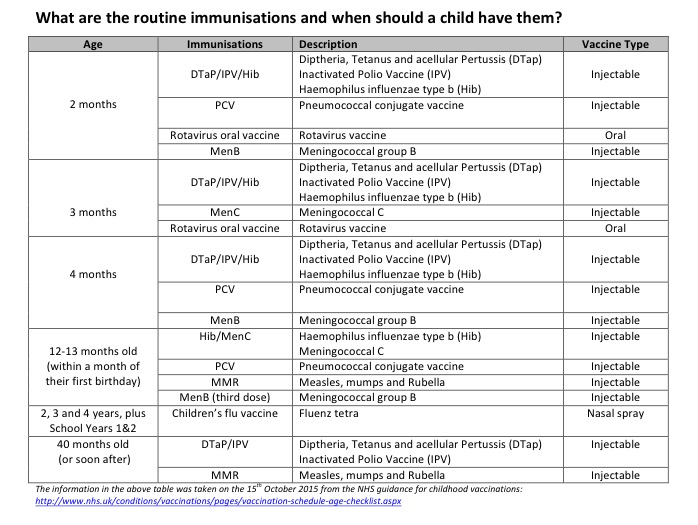
image1

From the list above, all vaccines are inactive with the exception of the following live vaccines – Rotavirus, MMR, Children’s Flu vaccine (note that for the children’s flu vaccine, the nasal spray is live, however there is an injectable inactive flu virus available).

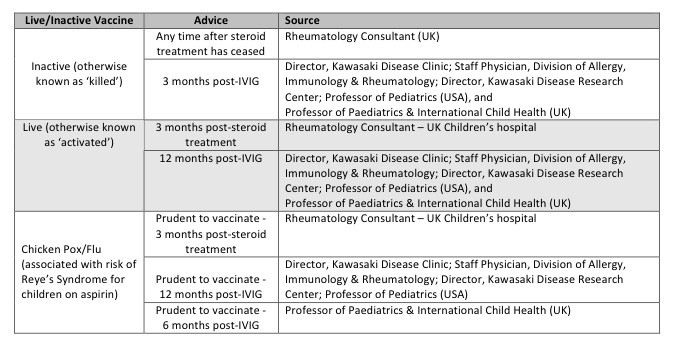
image2.PNG

These are just a few examples of the responses I received from medical professionals, and I can say that my internet research has thrown up much the same; anything from 3 months to 12 months.  Helpful, right!  My gut feeling was telling me I should err on the side of caution, and follow the advice of the US doctor who is considered the leading Kawasaki Specialist in the World – she calls herself a ‘Kawasakiologist’ and I believe she deserves the title.  Our GP agreed that Freya qualified for the injectable (inactive) flu vaccine.  My decision was made.  Well, kind of.  I had decided I wanted to get Freya caught up on the inactive vaccines immediately, then discuss the issue of the live ones with our Immunologist.  Chances were, by the time we got any decisions we would be nearing that 12 month mark anyway, so it was a win-win.  But our ever cautious GP decided that if we were speaking to an Immunologist anyway, there was no harm in waiting for that meeting before we started the immunisation process, and he felt happier to wait for clear direction from her.  So, again we would have to wait.

So yesterday we had that appointment with the Immunologist.  I was all geared up to go in and cover all my questions, but unfortunately an hour’s wait with a baby that has decided that a high pitched squeal is the best means of communication made the whole process a little trickier than I had anticipated!  The doctor was the Infectious Diseases Consultant who treated Freya when she arrived at the Children’s Hospital on day 8 of her illness.  That was nice, as I had the opportunity to thank her for her compassion, support and tireless determination to get to the root of Freya’s condition (especially as I was quite a difficult ‘customer’ who asked lots and lots of questions, and even accused them of breaking Freya’s heart at one point!)  She seemed genuinely pleased to see Freya looking so well.  She received the news that we had seen some improvement in her coronaries since the acute stage of the illness with a broad smile, and she was happy that Freya has not had anything more than one little cough and cold since her hospitalisation.  I expected her to call me a muppet for being a cautious and over-protective mother, but instead she said she felt I was doing the right things, which was reassuring.

I came away from the appointment with a solution, individualised for Freya.  I still don’t have a definitive answer about the timescales related to immunising after IVIG.  But then why would I?  The fact that I can quote at least 5 different timescales from medical papers and journals across the world tells me a lot of them are guessing. I’ve read that medics aren’t completely sure why IVIG even works in the case of KD – they are still trying to understand what causes the illness in the first place, so I guess it would be near impossible to understand why the treatment works. It just does (in most cases).  The Immunologist told me that they deal with children who have compromised immunity as a result of a bone marrow transplant, for example.  Those children are given immunisations  in line with the hospital guidelines and they do not wait 12 months.  That said, she agreed that they had learned more than they previously knew about KD from Freya.  Presenting at just 7 weeks old, and having had no previous immunisations, she is a bit of an unusual case.  So they have agreed to follow a similar process to that of a bone marrow transplant patient.

What are they going to do?

They have taken blood samples from Freya in order to test her body’s immunity status.  They will be testing Freya’s immunoglobulin levels, and lymphocytes (T-cells).  Depending on those results (and I am sorry, I didn’t ask what result they would be expecting or what a low or high result might indicate, or whether there was a chance they might just be reading ‘borrowed’ antibodies as a result of the circulating IVIG – I will ask that when we discuss results), they will start the routine inactive vaccines and the injectible (inactive) flu vaccine.  After a period of time following those (I think she said 6 weeks), Freya’s immunoglobulins will be tested again to check her immune response to those vaccines.  Assuming they get the right result (whatever that might be), they will then progress to live vaccines, including chicken pox.  If we get moving quickly, Freya may even make it in time to have the MMR vaccination at precisely the right time.  I have some decisions to make about Rotavirus (which I believe is time-specific so she may already be considered too late) and Meningitis B, as both have stated increased risks of contracting Kawasaki Disease in the patient information.  I know it is incredibly rare for KD to reoccur, but show me one parent of a kid with a rare condition who finds that word reassuring.

Yes, I am still confused as to what the right answer is about timescales for vaccinations post treatment Kawasaki Disease.  But, I think I have a great solution for me, for Freya.  Rather than guess based on the varied guidelines out there, we are going to take a look at Freya as an individual.  Actually take a look inside and see what is going on, and make the decisions based on what she tells us.  The Immunologist has always said that Freya showed them the path to a diagnosis, and that they learned so much from her.  Seems she is going to teach them something new.  And as much as I probably do their heads in with my questions and powerpoint presentations, I do know that they respect me for it and that they are luckily not too arrogant as to discount this mum’s research and opinions.  She actually said it was helpful and told Freya that she is as well as she is because of her “amazing mum”. I don’t know about that, but in a sea of negativity and low moments, I’ll take that right now.

Whatever I learn from this experience, I will share.  Every Kawasaki case is different, no matter how similar some of the stories might seem.  No wonder it is a tricky one to spot, diagnose, treat and understand.  I hope in my lifetime they find the cause so I can finally understand why this happened to us, to my little Peanut.

Our Rheumatologist said that the subject of immunisations in these cases is “contentious” and currently being debated.  Another said that “guidance is not clear as there are no trials/studies to guide us for this exact situation…” and “…is a balance involving unknowns…”  He gave his opinion and advice, stating that “…there are other equally ‘correct’ versions too!”  No shit!

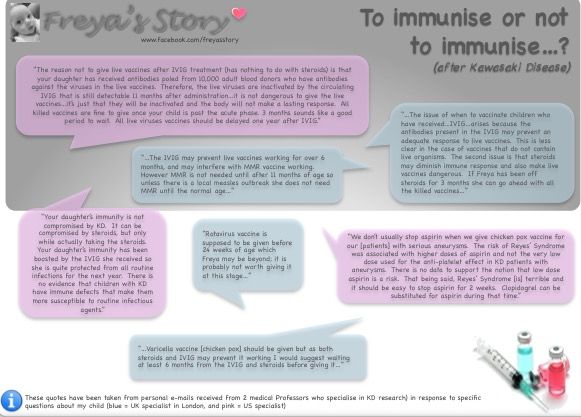
I’ll leave you with a few of the comments that I received from KD specialists here and in the US, which might help to dispel a few myths relating to IVIG and immunity.

FullSizeRender

And in case you can’t read that, I have pasted below:

“The reason not to give live vaccines after IVIG treatment (has nothing to do with steroids) is that your daughter has received antibodies poled from 10,000 adult blood donors who have antibodies against the viruses in the live vaccines. Therefore, the live viruses are inactivated by the circulating IVIG that is still detectable 11 months after administration…it is not dangerous to give the live vaccines…it’s just that they will be inactivated and the body will not make a lasting response. All killed vaccines are fine to give once your child is past the acute phase. 3 months sounds like a good period to wait. All live viruses vaccines should be delayed one year after IVIG.”

“We don’t usually stop aspirin when we give chicken pox vaccine for our [patients] with serious aneurysms. The risk of Reyes’ Syndrome was associated with higher doses of aspirin and not the very low dose used for the anti-platelet effect in KD patients with aneurysms. There is no data to support the notion that low dose aspirin is a risk. That being said, Reyes’ Syndrome [is] terrible and it should be easy to stop aspirin for 2 weeks. Clopidogrel can be substituted for aspirin during that time.”

“Your daughter’s immunity is not compromised by KD. It can be compromised by steroids, but only while actually taking the steroids. Your daughter’s immunity has been boosted by the IVIG she received so she is quite protected from all routine infections for the next year. There is no evidence that children with KD have immune defects that make them more susceptible to routine infectious agents.”

“…The issue of when to vaccinate children who have received…IVIG…arises because the antibodies present in the IVIG may prevent an adequate response to live vaccines. This is less clear in the case of vaccines that do not contain live organisms. The second issue is that steroids may diminish immune response and also make live vaccines dangerous. If Freya has been off steroids for 3 months she can go ahead with all the killed vaccines…”

“…The IVIG may prevent live vaccines working for over 6 months, and may interfere with MMR vaccine working. However MMR is not needed until after 11 months of age so unless there is a local measles outbreak she does not need MMR until the normal age…”

“Rotavirus vaccine is supposed to be given before 24 weeks of age which Freya may be beyond; it is probably not worth giving it at this stage…”

“…Varicella vaccine [chicken pox] should be given but as both steroids and IVIG may prevent it working I would suggest waiting at least 6 months from the IVIG and steroids before giving it…”


The Maternity Thief

Today Freya is 9 months old.  9 months old.  I can’t even compute that.  It means that we are 7 months post-diagnosis, and yet it seems like only yesterday that we were taking our baby girl to A&E with a high temp and a low appetite, completely unaware that from that day on our lives would change forever.  I had my precious baby girl at home with me for 7 weeks before that fateful day.  Just 7 weeks; it was no time at all.  Then Kawasaki Disease stole into our lives, and stole away my maternity leave.

I have previously shared Freya’s journey, our journey, with her illness through a number of blogs, taken from a journal that I wrote during our 6 weeks in the hospital from 31st May to 9th July 2015. Before she became ill, I had spent most of those early weeks resting, making the most of being a mature mum who had no desire to rush into doing anything too much at all.  I was going to allow myself to enjoy this one, and the housework could wait.  So almost all of those 7 weeks, give or take a few visits from friends and relatives here and there, were spent cuddled up on the sofa with my little ‘Peanut’, and I watched movies or slept to recharge my batteries after what had been a pretty tiring delivery.  On the 30th May 2015, when my parents came to visit, we went for a day out to Cannon Hall Farm, a local attraction where my older children could feed the animals, and blow away some cobwebs with some fresh Summer air.  I was content, no, more than that, I was happy beyond what I could ever have imagined when I found myself unexpectedly pregnant again at 40.

The following day, Freya awoke as normal, but instead of guzzling down that first bottle of the day she laboured through it with a stuffed up nose, and after what seemed like an age of feeding she’d managed about an ounce of formula (I had stopped breastfeeding the week before).  Sure, I thought it was strange, but not being a particularly over-anxious parent I put it down to her snuffly nose, and decided to keep an eye on her.  She didn’t take the next feed either; I guess that was around 9am, and whilst my concern was peaked, I didn’t make any rash judgements about the situation.  She was sleepy, but what 7-week old baby isn’t?  That’s all they do! Feed and sleep, sleep and feed.  Except at that moment, Freya wasn’t too fussed about the feeding part.  I would say it was around 11:30 or 12 when I decided that I couldn’t let her sleep any longer without trying to get some milk in her, so I made up a bottle and went to rouse her from the bouncy chair she was sleeping in.  She looked warm, and was hot to the touch, so I fetched the digital ear thermometer and took her temperature.  38.3ºC.  She had a fever.

Again, this didn’t panic me particularly, and I sent my husband to the local Mothercare store to buy a medicine dispensing dummy (I’d had one with my son, and it is a great way to get medicine into a tiny baby).  While he was gone, I fished out the Calpol (paracetamol) and began to read the label for the right dosage.  “From 2 months” read the label.  Hmmm, should I give it to her?  Was it safe?  She was only a week off 2 months, and surely they were over-cautious with these things? But I couldn’t risk it – she was too precious, and I would never have forgiven myself if anything had gone wrong.  Both my mother and mother-in-law were home with me, and both agreed that if I was concerned, I shouldn’t mess about.  I should take her to A&E (the ER, for my American readers) – it was a Sunday, you see, so our GP surgery was closed (a factor in our KD journey that later I would be grateful for).  I opted to call the out of hours surgery number, and after explaining that Freya had a snuffly nose, high temp and no appetite, and that her breathing was becoming quite laboured (her tummy was moving up and down, as opposed to her chest), they commented that it was unusual for a baby as young as Freya to have a fever and directed us to take her to the local hospital right away.

The rest, as they say, is history.  But I often get asked about Freya’s journey, how we knew, what her symptoms were, so I thought it would be useful to document our experience with KD in 2015.

Week 1 (31st May to 6th June 2015)

  • Visit to local hospital A&E with low appetite, high temperature and laboured breathing.  Lethargy was not noted, as she was a tiny baby who was naturally sleeping a lot.
  • Transferred to Children’s Observation Unit for observation.  Immediate concern was Group B Strep as I had tested positive during the pregnancy.
  • Admitted to Children’s Ward for overnight observation and placed on IV antibiotics as a precaution (standard procedure for suspected meningitis, which can develop in babies who have contracted GBS from the mother).
  • Following morning around 5am, Freya develops a rash on her torso, which quickly spreads to her limbs.  Doctor is called who states that Freya’s body is shutting down and she is wheeled to the High Dependency Unit (HDU).
  • Freya is treated with a number of fluid boluses (“a rapid infusion of intravenous fluid or medication that is usually administered to correct a life-threatening condition”, Wisegeek.org).  I don’t know what they put into her body, I just know that they acted like her life depended on it, and I looked on, heartbroken and in shock.  I was alone; I called my husband and told him I thought he should come to the hospital.
  • Remains in HDU for 3 days.  IV antibiotics (Amoxycillin and Cefotaxime) and fluid are administered via cannula sites, as well as regular antipyretics (paracetamol and ibuprofen).  Due to the size of the tiny veins, the cannula are unstable and new sites have to be found daily, sometimes more often.  Monitors attached by wires to Freya’s body show a very high heart rate, and low oxygen levels.  Temperatures continue to spike despite medication to bring them down.
  • Condition stabilises, and Freya is moved back to the Children’s Ward.  Feeding is via an NG tube up her nose, and she has cannulae in her wrists and ankles.  Eventually a cannula is inserted in her head as the other sites fail.  Blood tests and throat swabs are not conclusive and do not test positively for any standard illnesses.  Continue to suspect GBS and/or bacterial meningitis.  CRP reaches over 300.  3rd antibiotic is introduced (Gentamicin).  Lumbar puncture is needed to diagnose meningitis, but Freya is too sick to undergo the procedure.
  • Day 5, nurse confirms nasal swabs test positive for Rhinovirus (the common cold).  One consultant states that Rhinovirus could make a tiny baby very sick. Another says “Rhinovirus does not do this to a  child”. Chest x-rays and cranial ultrasound are clear.
  • Day 6, Freya undergoes lumbar puncture.  Results show raised white blood cells, but not high enough to indicate bacterial meningitis.  However, Freya has been on 3 antibiotics for 6 days and it is considered that the condition may already have been fought off
  • Day 7, we are told that on a scale of 1-10, with 11 being dead, Freya is a 10.

Week 2 (7th to 13th June 2015)

  • Day 8, consultant (one we haven’t seen before) says that he is not happy that a diagnosis has not been reached and that if it was his child he would expect answers. Advises he has arranged transfer to a nearby Children’s Hospital where they had access to more resources, including the ability to carry out an echocardiogram (heart scan).  Freya has her first ride in an ambulance. That evening I point out Freya’s swollen feet to the on-duty Consultant. He requests an x-ray on her chest, head and stomach, and asks for her foot to be x-rayed for suspected injury at the cannula site (I believe this was pre-peel swelling and a symptom of KD).
  • Day 9, chest, head, stomach and foot x-rays are all clear.  Echocardiogram shows a slight murmur, but is clear otherwise.  Advised a murmur is not unusual in a newborn baby and usually resolves as the heart develops.
  • Immunology and Infectious Diseases run various tests on daily blood samples.  Antibiotics are replaced with Meropenem due to differences in hospital protocols.  Acyclovir is also introduced (known for treatment of the herpes virus).
  • Day 10, low haemoglobin levels result in Freya needing a blood transfusion.
  • Day 11, MRI scan is undertaken to look for clusters in the brain that would indicate GBS infection.  Freya is still so sick, she sleeps through the MRI scan and does not require a general anaesthetic.  MRI results are clear.
  • Day 12, Freya is placed under general anaesthetic in theatre, and undergoes a bone marrow aspiration to test her cells for Leukaemia. Tests are negative.  Two further lumbar punctures are undertaken, but unable to collect any spinal fluid.  Prolific rash appears on Freya’s arms and legs.  Immunology Consultant requests Rheumatology opinion.  Rheumatologist believes it is likely to be an infection, but requests a follow up echocardiogram and further blood tests.
  • Day 13, sent for follow up echo, Sonographer says that he is looking specifically for signs of Kawasaki Disease.  This is the first time I had heard those words.  Sonographer apologises for putting his foot in it.  Rheumatologist arrives to inform us that they have reached a diagnosis.  Freya has Kawasaki Disease, and her coronary arteries are dilated.  She requires immediate treatment of Intravenous Immunoglobulin, a blood product containing antibodies from thousands of donors.  It is administered intravenously over 12 hours.  Great Ormond Street and  Newcastle Children’s Hospital are consulted and Freya is given methylprednisolone (high dose IV steroids) and aspirin (20mg).  Seen by Ophthalmology to look for any issues with her eyes, nothing of note identified.  All antibiotics are stopped.  Contact made with Cardiologist at Leeds General Infirmary who says he is “not excited” by the coronary dilation.
  • Day 14, Freya receives the second half of her IVIG infusion (due to her size she had to have the dose over 2 days). Echo shows no change from previous day.

Week 3 (14th to 20th June 2015)

  • Day 15, follow up echo shows still no change from previous two days.  CRP remains elevated.  Rash has gone completely, and temperature spikes have reduced in frequency.
  • Day 16, further echo shows significant increase in coronary artery dilation.  The word aneurysm is mentioned.  All three coronary arteries (left, right and left anterior descending) are dilated to over 5 times the normal diameter for a baby of her age. A second dose of IVIG is required.  Contact made with Leeds Cardiology who insist that Freya is transferred to their Cardiac Unit. IV steroids stopped, and oral steroids are prescribed.
  • Day 17, second half of second IVIG dose is administered and Freya is transferred to Leeds.  Echo is carried out by Cardiologist who concurs with Sheffield’s findings and identifies a leaking aortic valve.  Freya is admitted to the Cardiac HDU.  Leeds Rheumatologist discusses possibility of administering a drug called Infliximab as they believe the inflammation is still ongoing.
  • Daily echo’s show no improvement, but no worsening either.  Request made to NHS England to give Freya Infliximab, not widely used in the treatment of KD, and not permitted for use in babies under 3 months (at that hospital at least).  Funding agreed based on Freya’s case; “a rare and severe presentation” of “persistently active Kawasaki Disease” (letter from NHS England granting funding).  Warned of the risks; Infliximab switches off TNF-alpha, the protein that helps the immune system to fight cancer (although it should be noted that this has been found in patients receiving the medication over prolonged periods, and no evidence has yet been found of malignancy following a single dose).  Cardiologist explains the risks associated with Freya’s condition; stenosis (narrowing of the arteries), clotting (causing potential heart attack) or rupture (unpreventable without cure).
  • Day 19, Infliximab infusion is given with no adverse reaction.  Freya is transferred back to Sheffield the following day

Weeks 4-6 (21st June to 8th July 2015)

  • Begin weaning steroid dose with a view to ceasing after 3 weeks.
  • Bloodwork shows improvements.  No temperatures or rashes.  CRP dropping to near-normal levels (13 on  Day 21).
  • Day 26, ambulance transfer to Leeds for cardiology follow-up.  No change. Advised unlikely to see any improvement for at least a year.
  • Allowed home for day release, days 28 and 29.  Discharged on Day 30 with instruction to return for bloodwork in one week.
  • Day 31, Freya’s nappies show blood in her stools.  Return to Sheffield Children’s Hospital with gastrointestinal bleeding.  Re-admitted to the ward.  Gastroenterologist wants to stop aspirin, Cardiology refuse.  Administered IV lansoprazole.  Great Ormond Street confirm there can be a small window to cease the aspirin if necessary.  Freya’s formula is switched to Neocate, a mild non-cow’s milk protein formula. Bleeding stops within 24 hours.  Ultrasound shows abnormalities in the arteries in Freya’s bowel.  Barium swallow test shows normal function.  Diagnosis: cow’s milk protein allergy exacerbated by KD inflammation and medication.  Steroids weaned at faster pace than originally planned.
  • Day 37, follow up Cardiology appointment in Leeds shows a reduction in the dilation of the coronary arteries (our “Wow!” moment) and the leaking valve has corrected itself.
  • Day 38, Freya is well, but kept in as a precaution.  Lips are still cracked and sore, bleeding when she cries.  Finally discharged on Day 39 after Barium Swallow test returns a normal result.  All bloodwork within normal levels, with the exception of ESR which remains slightly elevated.

Since then…..

13th July – follow up Rheumatology appointment (Sheffield) shows ESR remains elevated, but declining.  Cardiology follow up (Leeds) shows no change from previous echo. Aspirin dose is increased based on Freya’s weight gain (standard anti-platelet dose in KD patients is 5mg per kilo).

6th August – Day 68, follow up Cardiology appointment shows further reduction in the dilation of the coronaries, with the right coronary artery (RCA) normalised, and the LCA reduced to 3mm (still large for a baby, but not considered as severe).

10th August – Rheumatology Follow-up (Sheffield) – happy with progress,  all bloodwork has returned to normal ranges

13th August – Ophthalmology Follow-up (Sheffield) – discharged

3rd September – Gastroenterology Follow-up (Sheffield) – happy with progress

7th September – Cardiology Follow-Up (Leeds) – no change.  Care transferred to Doncaster.

16th October – Gastroenterology Follow-up (Sheffield) – happy with progress

4th November – Cardiology Follow-up (Doncaster).  No change.  Request transfer back to Leeds due to poor experience.

11th November – Gastroenterology Follow-up (Sheffield) – happy with progress

And there it is.  The last 9 months of my life on maternity leave.  Writing it down like this has highlighted to me why I feel so exhausted, and so cheated of the year I had planned to take off with my new daughter.  As I type, tears have begun to run down my cheeks.  I think that’s what upsets me the most.  The unfairness of it all.  When I gave birth to Freya, when she was finally here, I decided it was time to banish all that negativity and really live life.  I was going to enjoy every second of my maternity leave with her.  This was a chance I wouldn’t get again.  I imagined picnics in parks in the Summer sunshine; instead I watched other mums with their babies through a hospital window.  I imagined meeting new people as I introduced my baby to new experiences; instead I kept her away from other children because of a repressed immune system, and later not being able to immunise or protect against the potentially fatal consequences of illnesses like the flu or chicken pox.  

Don’t get me wrong, I have made some wonderful memories along the way, and in between the hospital stays and medical appointments, the calendar is peppered with visits to the Brontë Parsonage Museum, and Manchester’s Christmas Markets.  But where there are blanks on the calendar, there have been numerous phone calls battling the prescription of Freya’s aspirin, countless hours of research, letters to MPs…the list goes on.  The fact is that Kawasaki Disease stole my daughter’s health, took away my happiness, challenged my beliefs as parent and protector, and robbed me of my maternity leave.

Things are starting to settle down in 2016.  We are waiting for Freya’s next cardiology appointment where we can only hope for good news.  A blessing to stop researching for answers I will never find came in the form of e-mail responses from two cardiology professors, and specialists in Kawasaki Disease, and I feel a sense of relief from that.  Freya has an appointment with Immunology at the end of this month where I hope to get some closure on the immunisation issue and develop a plan to catch up on the vaccinations that Freya missed, plus those that might save her from a worse fate (rare or not!).  Perhaps we might even be able to take a holiday when we know she is less likely to pick anything nasty up on an airplane.  In March we see the Dieticians at Sheffield Children’s Hospital to discuss the introduction of dairy into Freya’s diet once she reaches one year old.  And following that, if there are no adverse reactions to cow’s milk in her diet, we should have our final Gastroenterology appointment.  I am not sure how long we will continue to see Rheumatology, but they mentioned 2 years at one point, so I guess we will wait and see.  That will leave us with Cardiology, which is likely to feature in Freya’s life for the foreseeable future.  They said “for life”.

I have 3 months left with my beautiful daughter, before my maternity leave comes to an end.  Instead of being a time of transition into the parental role, it has been a rollercoaster that I have wanted to get off from the first day Freya showed signs of illness.  I have enjoyed many precious moments, overshadowed by sadness and fear.  But I have known true love, and I have fought with every inch of me to keep my daughter safe.  I cannot imagine a life without her in it, and because she is here I have to be grateful, even if the past year has been hateful.  I cannot even start to think about leaving her in April.  Seems the challenges for me are not over yet.

IMG_4859
I wish I could turn the clock back to these days, cuddling on the sofa without a care in the world

Someone Else’s Story

If ever there was a story that reinforces the need to raise awareness of Kawasaki Disease, then it is the one I will be sharing with you tonight in a blog that is very different to my usual writing; today I am giving you someone else’s words.

This is Max’s story, shared on Social Media today by his mother, Maryann, a woman with more strength than I could ever hope for.  Like me, Maryann is committed to sharing Max’s story to raise awareness to help prevent future misdiagnosis, and to pay something forward; to make our children’s suffering at the hands of KD worthwhile.  Unlike me, Maryann’s journey ended with unimaginable heartbreak.  She has given me permission to share her post here in my blog, and I have therefore copied without edit for you to read, just as I did when I awoke to the post this morning.

Today’s blog is written in support of all the children who have suffered with this devastating illness.  It is written in memory of the Mighty Max Rocklin.

“I am only doing a condensed version of what happened last summer.  June 22, 2014 Max complained of his belly hurting around his belly button. The next day he complained of having a pain on the right side lower abdomen and started running a fever. I called his doctor and she wasn’t in. So I gave him Ibuprofen and watched him. Tuesday morning he woke up with his left hand drawn up and his face felt numb. So I took him to the first emergency room. They said he has appendicitis. They couldn’t handle that there. So he was transported by ambulance to another local hospital. They did an ultrasound of his belly. His illium, small intestines and colon was inflamed. So the surgeon there said Max needed to go to a children’s hospital. They couldn’t transport him until the next morning. So he was admitted to the hospital. They wanted to do a ct scan with conarast. So that was done. He still was running fever and hurting.
Wednesday morning Max was transported, by ambulance, to a hospital 4-5 hours from our house. The ambulance started smoking on our way there. So they had to pull off the highway. The airconditioner stopped working. They had a small fan to blow on Max. They decided to throw on the lights and sirens and speed there. We got to the hospital and saw 2 doctors. One was certain he had Crohns disease. (Max NEVER had diarrhea) They wanted to do an endoscopy and colonoscopy. So he had to drink these huge cups of myrilax. He couldn’t drink them. So they said they would have to put an NG tube down his nose into his stomach. My mom went for a walk at that time. I stayed with Max. They didn’t sedate him. I had to watch my sweet boy scream, “Help me momma!” over and over again. When they were done. I tried to comfort him. He said, “No don’t touch me.” He was upset because I couldn’t help him. That totally broke my heart. He had wires everywhere. He started having diarrhea from the myrilax. So I had to carry him to the bathroom because he was so weak. I would undo all of his wires, pick him up, carry him and pull the iv pole with us into the bathroom. I would have to sit in front of him so he could lean on me. He would hold on tight and pat my back. God I miss that sooooo much!
The doctor continued to say he had Crohns because now he had diarrhea. Um, he didn’t have it until they gave him myrilax!!! He was also tested and it came back that he had C Diff. A contagious virus that comes from dirty hospitals! So we were quarantined to the room. I had to bleach everything in the room if we touched it. Mom and I could leave the room as long as we had gloves and a gown on. This was for almost an entire week. I think it was Thursday that they did  the endoscopy and colonoscopy. Nothing showed Crohns! By this time Max had bright red eyes, a rash from head to toe, red spots under the skin on his palms and feet, feet, legs and abdomen swollen, his feet were peeling, his fingers were peeling and his pinky nail was coming off.I argued with so many doctors, interns, nurses, etc. NO ONE would listen to me! They always had an aswer to why these things were happening. His white blood count was through the roof!!! He had chest pain several times. They would just give him more morophine.
He was on Iv’s, morophine, vancomyacin, ibuprofen, benadryl, etc. By July 3, 2014 they said he could go home because his white blood count was down. So after 9 days in the hospital they were sending him home with antibiotics.My thinking was his blood work looks better so let’s take him home. Sometimes people get better at home. On July 4 Max got his bunny we promised him in the hospital. He was still so sick. So he slept with us. He lost 7 lbs in the hospital so he looked so sick. I started him on pediasure and fed him whatever he wanted. He started looking so much better.
July 12 he wanted to play outside for a few minutes. So we said ok because he was doing so much better. About 15 later he came in with chest pain. It didn’t get better so we took him to the emergency room. They said he needed an echocardiogram but couldn’t do it because he was a child!! The doctor said it was probably just indigestion from the prednisone. But the same doctor wrote the word Kawasaki across the top of the dicharge papers. We were sent home. I called the dr 4-5 hours away. She said to give him tums. He started feeling better. The next day he was going down hill. So back to the ER. The doctor said we had to get Max back to the hospital 4-5 hours away. So we waited for several hours for transport. We got the same ambulance with no air. We got to the hosptal at 1:00 am. So Max and I got in his room and we laid down. July 14 he had an echocardiogram. I thought there would be nothing. But the cardiologist had this horrible look on his face. He told me that Max had 4 aneurysms in his heart.1 normal size, 2 medium and 1 was the biggest they had ever seen in a child. He also had a blood clot to the main artery of his heart. The room spun, my chest was pounding, I kept thinking, “NO you are wrong!” I didn’t let Max see me upset. The cardiologist said, “Max has Kawasaki Disease.” What? I had never in my life heard of something like this. Why wasn’t my son diagnosed sooner? So 22 days after he started getting sick he was finally diagnosed. I called my mom, dad and husband to get to the hospital. The doctor was talking with a specialist in San Diego. They wanted to transport him in a private medical jet to San Diego. But they couldn’t because of the blood clot in his heart. He was put in ICU.  So they gave him coumadin to try to break it up. So the coumadin caused Max to have 4 hour nose bleeds. So iv #4 was put in to give him blood. His veins were so weird that the pic team had a hard time getting a vein. He would scream and cry when they would just flush them. He had 2 iv’s in each arm. I would have him look into momma’s eye and count with me. It would calm him down.
Tuesday July 15 Max got really scared. He said he saw glitter all over the room. All over Stephen and I. We figured that it was angels visiting him. At this point I still didn’t have it in my head that my baby could die. He kept having nose bleeds. But he was a little better. He wouldn’t eat or drink much.
Wednesday July 16 he wanted Chick Fil A. So my dad and Stephen went to get him some. He took just a couple bites. He played on his ipad and listened to music. Stephen and I wanted to take a shower. So we wentback to my parents hotel while they stayed with Max. I had a horrible feeling. I told Stephen we had to hurry.We saw Dunkin Donuts on the way back so we got him 6 donuts! He was asleep when we got back. My dad said he had a nose bleed the entire time we were gone. My parents went back to their hotel. Stephen went to lay down so he could sleep while I stayed up with Max. The ICU nurse came in and said Max needed some meds. So I first took some pictures of him sleeping because he was so stinkin cute. Then I woke him up. He took his medicine. I sat him up in the bed and told him I had a surprise for him. I put the donut box on his lap. He smiled the prettiest smile ever!! He took a bite and said, “How many can I have?” I told him all of thim if he wanted. About half way through his first donut (he still had a bite in his mouth) he looked up at me and said, “I’m tired momma.” I said, “I know baby. It’s ok. I love you.” He layed back and went into a severe seizure. I yelled for help. I watched my precious boy ball up. I watched his eyes roll in the back of his head. I watched him twitching around. I saw him take his last breath. The nurses started cpr right away. I called my mom yelling, “He’s gone. My baby is gone!!” Stephen woke up to the yelling. The icu room filled up quickly. They made a line between us and Max so they could take turns doing cpr. I could still see my baby. I watched them intubate him and his loose toothe fell out. I don’t remember parts of that moment. I was told that I prayed so loud they could hear me throughout icu and the waiting room. I begged God to perform a miracle! I begged God to take me instead! I begged and begged to give me my baby! I prayed for everyone who was touching my son to see a miracle in all of this. I remember bartering with God. I remember hearing the doctor shout out orders to everyone. A surgeon came in and said they needed to do open heart surgery. I signed the paper and thought they would take him to the OR. No….they did it right in the ICU room with us there. They tried to make a wall between us and him but I saw what they were doing to my baby. At 11:55 pm a lady came over and said the machine was breathing for him. “There is nothing else we can do.” So Stephen told them to stop. I sat there in complete shock. It felt like a horrible nightmare. They cleaned Max up and wrapped him in a white sheet. They handed him to my dad and my dad handed him to me. He was so warm. How could he be gone? I felt his chest….no heart beat. I tried moving him thinking he would wake up. He didn’t. I could see his beautiful blue eyes. I rubbed my hands through his hair, counted the freckles on his face, felt his nose, eyes, lips cheeks, ears, hands, fingers, arms, feet, toes legs and whatever I could. I held him until he was ice cold. Then Stephen got to hold him. I saw that Max’s face was dirty so, like all mothers do, I licked my finger and cleaned his face. We had to go. So my dad took Max and placed him back on the table. I kissed him so many times. I didn’t know how to leave without my son. I am a VERY protective mom! I wanted to stay with him and make sure he was being treated good. But I had to leave the hospital without my baby boy. I didn’t know how long it would be until I saw him again. We had a 5 hour ride home.
I had to call Stevie to tell him his baby brother died. Call Red Cross to get Stevie a flight home. Stevie had to get a loan to fly home. Red Cross doesn’t pay for them any more. I slept the rest of the way home. When we got home we had to tell Nick and Corey. I hate that my boys had to go through all of that pain!!!
Maxwell Joseph Rocklin passed away on July 16, 2014 just 5 days before his 8th birthday.
Max was the funniest, cutest, smartest, toughest, loving, caring, giving, beautiful and handsome little Super Hero. He may have been littlle but he is MIGHTY!
His funeral was the day before his birthday. I wanted it to be a child’s funeral. So in the plants and flowers were Super heros.There were balloons. Some friends made super hero posters with Max’s pictures all over them. They also made superhero pins. We wore super hero tshirts. The night of his viewing a dear friend and his son dressed up at super heros. The day of his funeral my cousin’s husband dressed up as a super hero. The funeral home was packed full. I had several dear friends sing for Max. Rev Christ Turner did an amazing job also. I was in such a daze. I don’t remember the faces of everyone there. I just wanted to be with Max. I wanted to constantly rub my hands through his hair, kiss him, and tried to hug him. I knew those were the last moments I would ever see my baby boy on this Earth again!
Since Max’s passing we have recieved so much love and support. I can’t name everyone and everything they have done. Literally there is hundreds of people that have been here for our family! Max is loved by so many! He made me so proud of him. The selfish part of me wants him back no matter what. But if Max had lived he would not have been able to be a regular little boy. He couldn’t over exert himself, had to wear shoes even in the house, one little cut he could have bled to death (From the coumadin), he would have to stay away from anyone who was sick. I forgot to add that Max had several heart attacks while in the hospital and at home. He would just say his chest hurt. They never did an xray or anything the first week he was in the hospital. Max has saved so many lives since he has gone to Heaven. I prayed for a miracle and for Max to be healed. This was not the miracle or healing I wanted. But it is what God knew Max needed. Believe me that is hard to say. I love Max so much that I am thankful he is no longer in pain. But I want to hold my sweet boy. I want to hug him. I want to be his mommy. I always will be. But not the way I want to.”
I would like to thank Maryann for allowing me to share her incredibly sad story.  My heart has known the pain that this disease can cause, but my heart will heal with every breath that my daughter takes.  There will never be enough words to express my sadness that Kawasaki Disease took her son from this world, or any of the other children who lost their battle.  What I do know is that stories like these will serve to ensure that I do not allow myself to take one second of this life with our daughter (and her siblings) for granted.
And every month, on the 16th, I will try to remember to pay it forward for Mighty Max.
image1
Top Left: Maryann created a banner bearing the names of all of our children, with the top spot proudly bearing her son’s name Top Right: You can make out Freya’s name on the banner Bottom: Max lost his battle with Kawasaki Disease on the 16th July 2014. On the 16th of every month his family ask that you take a moment to pay it forward – do something nice to brighten someone’s day, in honour of the Mighty Max

Flashbacks and Intrusive Memories

As we move further away from the traumatic experience we had with Freya during the acute phase of her illness, it seems that I become more and more affected by what we went through.  If you’ve been reading my blog you will know that I recently received a loose diagnosis of PTSD, and am about to embark on treatment for that.  I was given a choice in relation to the treatment that I wanted, based on which element of my current state of mind that I wanted to tackle.  I can have talking therapy to help me get out all of my thoughts and feelings, or I can have specific behavioural therapy and EMDR to deal with the flashbacks.  I still don’t think I really know what route I want to take; I think I’d like to have the opportunity to do both.  We will have to see about that at my next appointment, I guess.

I’ve had a week or so of feeling pretty positive about life in general, getting to grips with the Christmas shopping and starting to look forward to the festive season, but at around 4am this morning, my happiness was rudely interrupted by memories of darker days.  But what is a flashback?  And what makes it more than just a bad memory or an intrusive thought?  I experience all three of those things, and I’m starting to recognise the difference.

Freya awoke at around 3am this morning, which is unusual for her as she usually sleeps through without a whimper until about 7:30am.  Some would say we are lucky it is unusual – the problem with that though, is that I’m just not prepared for it and don’t really know what to do when it happens.  Do we ignore, and hope she goes back off to sleep?  Should I change her nappy? Feed her? Take her into our bed?  I chose to change her nappy, and cuddle up with her in my bed in the hope that she would fall back to sleep.  After about an hour of convincing herself that 3am was the new playtime, Freya yawned! I seized the moment, and placed her back in her sleeping bag in her cot, which is still by the side of my bed (I haven’t quite reached the point where I am ready to put her in her own room).  Despite it being an unearthly hour, I switched on the butterfly that casts stars across the ceiling, and squeezed the tummy of the seahorse that would hopefully sing her to sleep.

And then it happened.

Lying there in the dark, with the outline of her cot just visible in the moonlight and that seahorse playing all too familiar lullabies, I was engulfed by a wave of nausea, and I felt the wetness of tears rolling down the side of my face before I had time to realise that I was crying.  My throat closed up, and I felt that my breath was caught somewhere in between my stomach and my lungs, and I thought I might actually be sick.  Suddenly, I wasn’t in my room anymore.  I was in a hospital cubicle. Cold under the hospital-issue blankets, I pulled them up under my chin and shivered.  Freya was wearing just a nappy and she was so, so hot.  She lay in a nest of blankets made both to make her feel secure, and to stop her from sliding down the cot which was raised at one end.  She hadn’t needed anything to soothe her at home; all she needed was me.  In here it felt like she needed something of her own that she could become familiar with, and so I had instructed her Daddy to buy the pink seahorse on the way to visit at the hospital one morning, and at every nap time and bedtime it’s little tummy would get a squeeze and soothing melodies mixed with sounds of the sea would pour out as it glowed reassuringly in the darkness.

IMG_5243

She’s gasping for air, but she won’t open her mouth. She looks like she is drowning.  Open your mouth sweetie, open your mouth.  I panic, jump up, hit the red button, a nurse appears.  A face mask is fitted, attached to a saline nebuliser to help clear Freya’s nasal passages, and she settles down.

I don’t want to wake up.  I don’t want to wake up because I am convinced I am going to see her there, looking at me with a faraway stare, lost and frightened and too sick to smile. I don’t want to wake up, because I know it won’t be long before they come to take more blood and she will cry until they’ve squeezed enough to fill 4 vials out of her little heel.  I don’t want to wake up because today I will be too scared to pick her up in case I upset the cannula in her  head, or her wrists, or her feet.  I don’t want to wake up because we will be alone and scared.

I wake up.  She’s crying.  That’s unusual for Freya; we are usually woken by beaming smiles and sounds resembling a bright “Hiya!” from her cot. I open one eye, she sees me.  She smiles.  She is snug in her sleeping bag, pink from the warmth and she looks at me with sparkling eyes.  Eyes that say, “We’re home mummy, we’re okay.”

How do I feel?

“So, what brings you to us today?”

There it is, the dreaded question.  The question that you know is going to be the first one they ask, so you rehearse it over and over while you’re sat in the waiting room.  The question that, when it actually comes out of the mouth of a psychotherapist, is most often met with a blank silence, and lots of tears.  It’s a funny question to ask I think (funny odd, not funny haha). I mean, where on earth do you start?  The relief of actually being in front of someone who is not only qualified to ask these questions, but might actually know how to help you deal with the answers, has always resulted in me falling apart right in front of them.  The same can be said of this morning.

I felt sick to my stomach this morning, and a couple of times I thought I might actually run.  But then they called my name, so I had to see it through.  These things can go many ways; a lot depends on who the person on the other side of the door is.  I’ve been known to go for help (yes, I’ve been here before, well kind of – I’ll explain later), and clam up the moment they’ve opened their mouth. “Yes, I’m fine.  In fact, I’m not really sure why I’m here.  I’ve been feeling much better lately…”  Mostly they are the kinds of people that are experienced in getting people to talk, and are warm and welcoming, and I spill the beans before my backside has even met the chair.

Today was like that.  I was introduced to a trainee psychotherapist who would be responsible for carrying out my assessment.  i did feel immediately at ease with both her and the psychotherapist present and was able to articulate how I felt to a degree.  I answered that question, after a pause and a moment to catch my breath and stem the tears, that I was struggling to come to terms with a situation that I found myself in.  I explained that I felt an incredible sense of sadness that our child was struck by this devastating illness, after just seven weeks of normal.  I explained that I felt afraid that I loved Freya too much, and that every time I felt positive about the prognosis I was overwhelmed by the fear that the rug could be pulled out from under my feet.  I explained that I felt angry at the world for not understanding how much this has impacted on our lives, and that I had considered taking myself and my daughter far enough away from all of this to convince me that it never happened.

After a considerable length of time where I switched between a mother unable to speak through the tears as I recounted some of the experiences that you will have read about if you follow this blog or the Facebook page, to a sensible, level-headed woman who could describe the illness and its effects with the knowledge of a medical professional, a conclusion was reached. I am not depressed.  I knew that.  I have suffered with depression in many forms in the last 11 years, and I knew that what I was feeling was not the same.  It’s one of the reasons why I have struggled on alone for so long; I didn’t have an appropriate label for what I was experiencing.  I don’t display the classic symptoms of someone with depression.  I enjoy my life and know that I have a lot to live for.  I don’t avoid people or situations, in fact I look forward to human interaction and an opportunity to escape, let my hair down, mingle with my peers.  I took part in a hen party this weekend, which I thoroughly enjoyed (apart from the bit where I cried myself to sleep looking at a picture of my precious Peanut).  Some of the old familiar thoughts have been creeping in; I text her ages ago, why hasn’t she responded? She has probably had enough of me/isn’t interested/doesn’t care/doesn’t want to be friends with me anymore.  But I’ve managed to ‘have a word with myself’ and been rewarded by a late response and an explanation that allayed my fears, and reaffirmed my common sense.  I get up every morning, shower, make myself look presentable (cue the school mums saying “Seriously! She thinks that is presentable!!”), I have my nails done, I buy nice clothes. I am still interested in my outward appearance, and take care of myself.

However, I experience anxiety like I have never known before.  Full blown panic attacks where I feel like I am being strangled, and my body wants to sink into a puddle on the floor.  Real, deep sadness that takes my breath away.  Intrusive thoughts that threaten every moment of happiness that I dare myself to have.  Confusion, anger, hatred, irritation.  I shout at my husband and the kids like an old fish wife at times; I have no patience.  I want to lock myself in a room for a week, or more, and shout, kick, scream, punch some walls; let the emotion of the last 6 months escape from me in one tremendous fight against myself and the world.

See, I’ve written my blog.  Every time I have feelings I need to share, I take to my Mac and write.  I don’t think about it, my words are not considered.  I sit and write whatever my fingers choose to type, and Prosecco-fuelled as I am now, it just comes out, unconsidered, but raw and real.  I thought it would help, that writing would be therapy.  It has a little, but not a lot.  I feel like the words have to be spoken, aloud, to someone who hasn’t shared this journey with me, to someone who hasn’t had their own journey to contend with, to someone who doesn’t have an opinion on what I should think or feel.  To someone who doesn’t wonder what all the fuss is about (you know who you are!).  And I do not want the rest of my life or hers to be defined by the bastard that is Kawasaki Disease.  It has already taken enough from us.  And right now, Freya doesn’t notice that there are tears behind every smile, but it won’t be long before she does notice.  “Why are you sad, Mummy?” These are not words I ever want to hear come from that sweet little mouth.  But they will, if I don’t take control.  And I don’t want Freya to grow up scared of this world she lives in, scared of her own strength, frightened to fall or take chances.  I want her to live, and love life.  How can she do that if I put her to bed every night afraid that she won’t wake up the next morning?

The psychotherapist admitted that the low intensity treatment they offer is not what I need.  It is likely that I am suffering from post-traumatic stress disorder (PTSD) and am being referred for appropriate treatment.  I have a number of choices ahead of me.  I need to choose the treatment that will benefit me and my family the most.  I can be treated for PTSD with cognitive behavioural therapy (CBT) and eye movement desensitisation and reprocessing (EMDR), which are standard treatments.  Or I can have talking therapy that will allow me to say aloud all the things I have kept inside of me for these past few months.  Both would benefit me.  I think the most important thing for me to deal with right now are the symptoms of PTSD.  I need to rid myself of the anxiety, and be able to walk into our local hospital without it having a physical and debilitating effect on me.  I need to get some sleep; stop staying up until 3am to limit the number of hours that I am not alert to Freya or aware of her nearness.  And I need to erase the flashbacks, because those are the most distressing of all.  I have lived through these things once, re-living them every day against my will is making me unwell.  I will never forget some of those moments, nor do I want to; those moments are what will ensure I never take a moment with Freya for granted.  But I don’t want to see them played out in my mind like a DVD on a loop every day of my life.  Those memories are stopping me from moving on, and from seeing the beauty of life that is in front of me.  And I want to move on more than anything.